Unconfirmed Google Updates & Content Quality Reckoning
Unconfirmed Google Updates & Content Quality Reckoning: The Survival Guide for the AI Era
The Modern Marketer’s Reckoning: An Introduction
If you’ve spent the last six months staring at your traffic charts with a sense of impending dread, you aren’t alone. We have officially moved past the era of "waiting for the Core Update." In the current landscape, volatility isn't an occasional storm; it’s the climate. We are living in a state of perpetual algorithmic noise where "unconfirmed updates" happen weekly, often shifting the goalposts for quality and relevance without a single word of guidance from Mountain View.
This is the modern marketer’s reckoning. It’s a brutal, two-fold challenge that demands a fundamental shift in how we define SEO success. On one hand, you’re forced to diagnose deep-seated site quality signals, those invisible "helpful content" markers that can sink a domain overnight. On the other, you’re fighting a silent war for visibility as traditional organic traffic migrates into AI-generated answers.
As a Senior SEO Growth Strategist, I’ve seen this play out across millions of data points. The sites that survive this reckoning aren't the ones chasing the latest "hack." They are the ones moving from reactive panic to a data-driven recovery. This 4,000-word guide is your manual for that transition. Using the Semrush One ecosystem, we are going to strip away the guesswork and build a technical and strategic foundation that thrives in both traditional search and the new world of Large Language Models (LLMs).
The goal is simple: total visibility. We aren't just looking for clicks; we are looking to ensure your brand is the definitive answer, whether that answer is delivered in a blue link or a ChatGPT citation.
Decoding the "Unconfirmed" Update: Why Google Isn't Always Talking
The frustration of the "unconfirmed update" is real. You wake up, check your dashboard, and see a 20% dip in sessions. You check the official Google Search Status Dashboard, and it’s all green. No core update, no spam update, just silence.
Why does this happen? Google’s ranking systems are now a complex web of interconnected AI models (like RankBrain, Neural Matching, and the systems powering the Helpful Content system). These systems are constantly learning. Small adjustments to weightings, how much "authoritativeness" counts vs. "load speed", can cause massive tremors in the SERPs without being classified as a "Major Update."
When you lose traffic to an unconfirmed shift, you are likely failing a "quality signal" test you didn't know was being graded. To survive, you must stop looking for a "fix" and start looking for patterns. The data exists; it’s just buried in the volatility.
Checklist for the Affected: The Immediate Response
If you suspect you’ve been hit by a quality-related shift, you need a triage plan. Do not start deleting content or changing URLs until you have completed this diagnostic checklist:
Diagnose Technical Quality Signals: Are your Core Web Vitals slipping? Is your crawl budget being wasted on "thin" utility pages? Google’s threshold for technical competence has never been higher.
Track Traffic Migration Paths: Where did your lost users go? Did they go to a direct competitor, or did they stop clicking entirely because an AI Overview (AIO) answered their query?
Monitor AI Displacement: Use LLM-tracking tools to see if your brand is still being cited as a source of truth even if your organic rank has dropped. If you're losing both, you have a fundamental trust problem.
Phase 1: The Quality Audit (The Site Audit Tool)
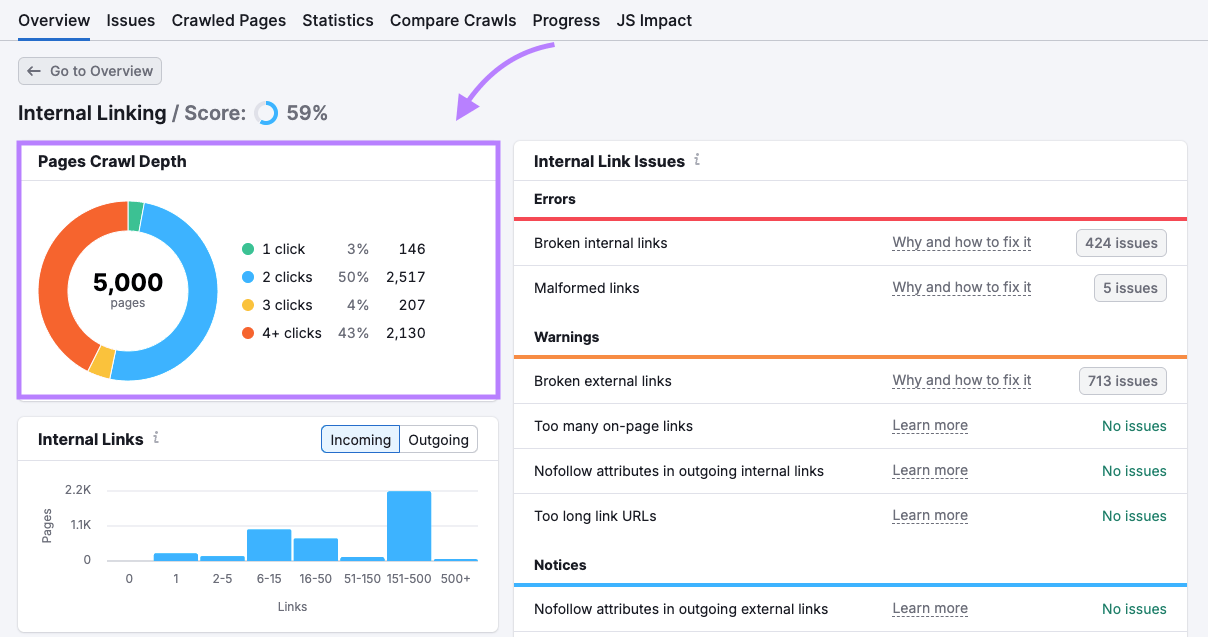
The first line of defense in any reckoning is a rigorous evaluation of your own house. You cannot build a growth strategy on a foundation of technical debt. This is where the Site Audit tool moves from a "nice-to-have" to a mission-critical diagnostic engine.
Implementation Workflow: Configuring the Deep Crawl
Most marketers use Site Audit on its default settings. That’s a mistake. To survive a quality reckoning, you need to configure the tool to see your site exactly how Googlebot does.
1. Crawl Settings: Set your "User Agent" to SemrushBot-Mobile. Google is mobile-first; if you’re auditing your desktop site, you’re looking at a ghost.
2. Crawl Source: Don't just crawl "all pages." Use your Sitemap. This tells you if the pages you want Google to see are actually healthy.
3. JS Rendering: Enable JavaScript rendering. If your content is tucked away in JS and the crawler can't see it, it's "thin content" by default.
Identifying "Thin Content" and Quality Flags
The Site Audit tool surfaces more than just broken links. It identifies the "thin content flags" that trigger site-wide algorithm penalties.
Low Word Count/High Bounce: The tool identifies pages that lack substantial value. In the AI era, "thin" content is anything that could have been summarized in a single sentence by an LLM without your site's unique perspective.
Duplicate Content & Metadata: High levels of duplication signal to Google that your site is a "content farm" or lacks editorial oversight.
Technical Debt: Broken internal links and 404s aren't just UX issues; they are signals of neglect. When an update hits, Google rewards the sites that are actively maintained.
Pro-Tip: Fixing technical debt is the foundation for surviving any update. An algorithm cannot reward high-quality writing if it cannot crawl your site efficiently or if technical errors suggest the site is unmaintained. If your "Errors" count in Site Audit is above 5% of your total pages, that is your number one priority, period.
Phase 2: Real-Time Detection (Position Tracking)
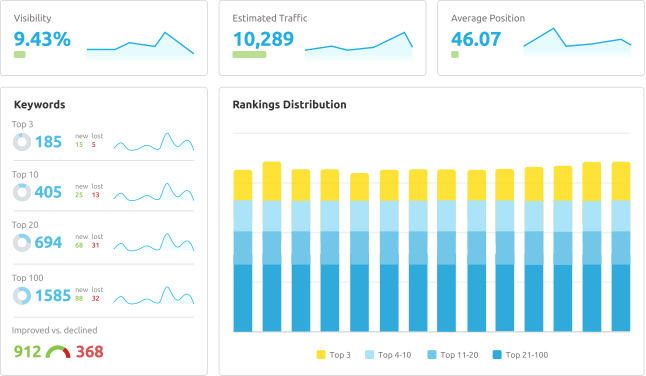
In a volatile market, looking at weekly or monthly data is like trying to drive a car while only looking in the rearview mirror. You need to see the "algorithmic noise" as it happens.
Using Position Tracking for Proactive Defense
Position Tracking within the Semrush One ecosystem allows for daily monitoring of your most valuable keyword clusters. This isn't just about watching a number move from 3 to 4; it’s about detecting volatility before the traffic damage is irreversible.
Setting Up Tagging: Group your keywords by "Intent" (Informational, Transactional, Navigational). Often, unconfirmed updates target specific intents. If your informational pages are dropping but transactional ones are steady, you have a "Helpful Content" issue, not a technical one.
Share of Voice (SoV) Monitoring: This is the most important metric in Position Tracking. It measures your overall "visibility" in the market. If your rankings are stable but your SoV is dropping, it means Google is adding more "clutter", ads, AIOs, and SERP features, above you.
Cannibalization Reports: One of the most common reasons for a "sudden drop" is internal cannibalization. Position Tracking will flag if two of your pages are fighting for the same spot. In an update, Google often "cleans up" the SERP by demoting both pages.
Detection Before Damage
By monitoring daily fluctuations, you can spot a "ranking slide" early. If you see a cluster of 50 keywords all drop 5 positions on a Tuesday, you don't wait for Friday's report. You immediately look at the competitors who jumped over you. Are they more authoritative? Is their content more modular and "AI-friendly"? This proactivity allows you to pivot your content strategy in days rather than months.
The Competitive Shift: Where Is Your Traffic Migrating?
When an update hits, your traffic doesn't just disappear into the void, it goes somewhere else. Finding the "where" is the key to understanding the "why."
Organic Research: Mapping the Winners
Using the Organic Research tool, you can input your domain and see a list of "Competitors." But don't just look at your traditional business rivals. Look at the domains that are gaining visibility on the specific keywords you lost.
Identify Content Patterns: Analyze the winners. Are they using more FAQ schema? Is their content structured in "modular" blocks (perfect for AI digestion)? If the algorithm is rewarding a new type of content structure, you need to adapt yours immediately.
Historical Benchmarking: Use the "Compare" feature to see a side-by-side timeline. Did the winner gain traffic exactly when you lost it? This confirms an algorithmic "swap."
Deep-Dive: The Parasite SEO Problem
One of the most frustrating trends in modern search is "Parasite SEO." This is when high-authority domains (think Forbes Advisor, Outlook India, or Reddit) "rent" their authority to third-party content creators. Because these domains have massive "trust" scores, their content often ranks instantly, displacing smaller, niche-specific experts.
How to combat this with Keyword Gap:
1. Enter your domain and the domains of the "parasites" taking your spots in the Keyword Gap tool.
2. Use the "Missing" or "Weak" filters.
3. Look for keywords where a broad-authority site is outranking your expert content.
4. The Strategy: You cannot out-authority Forbes, but you can out-expertise them. Use Organic Research to find the specific "subfolder" the parasite content lives in. If you see they are using a specific template, analyze its technical signals. Often, these parasite pages win because they are extremely fast and highly structured. Your path to recovery involves matching that technical efficiency while leveraging your unique, non-AI-generated data.
Strategic Case Study: The E-commerce Pivot
A mid-sized home goods retailer lost 40% of their organic traffic during an unconfirmed November shift. By using Organic Research, they found the traffic wasn't going to other retailers, it was going to Reddit and Wirecutter. The "pattern" was clear: Google was rewarding "first-hand experience" and "unbiased reviews." The retailer shifted their strategy from product descriptions to "Expert Use Cases" and regained 25% of their traffic within two months.
The New Battleground: AI Visibility and LLM Displacement
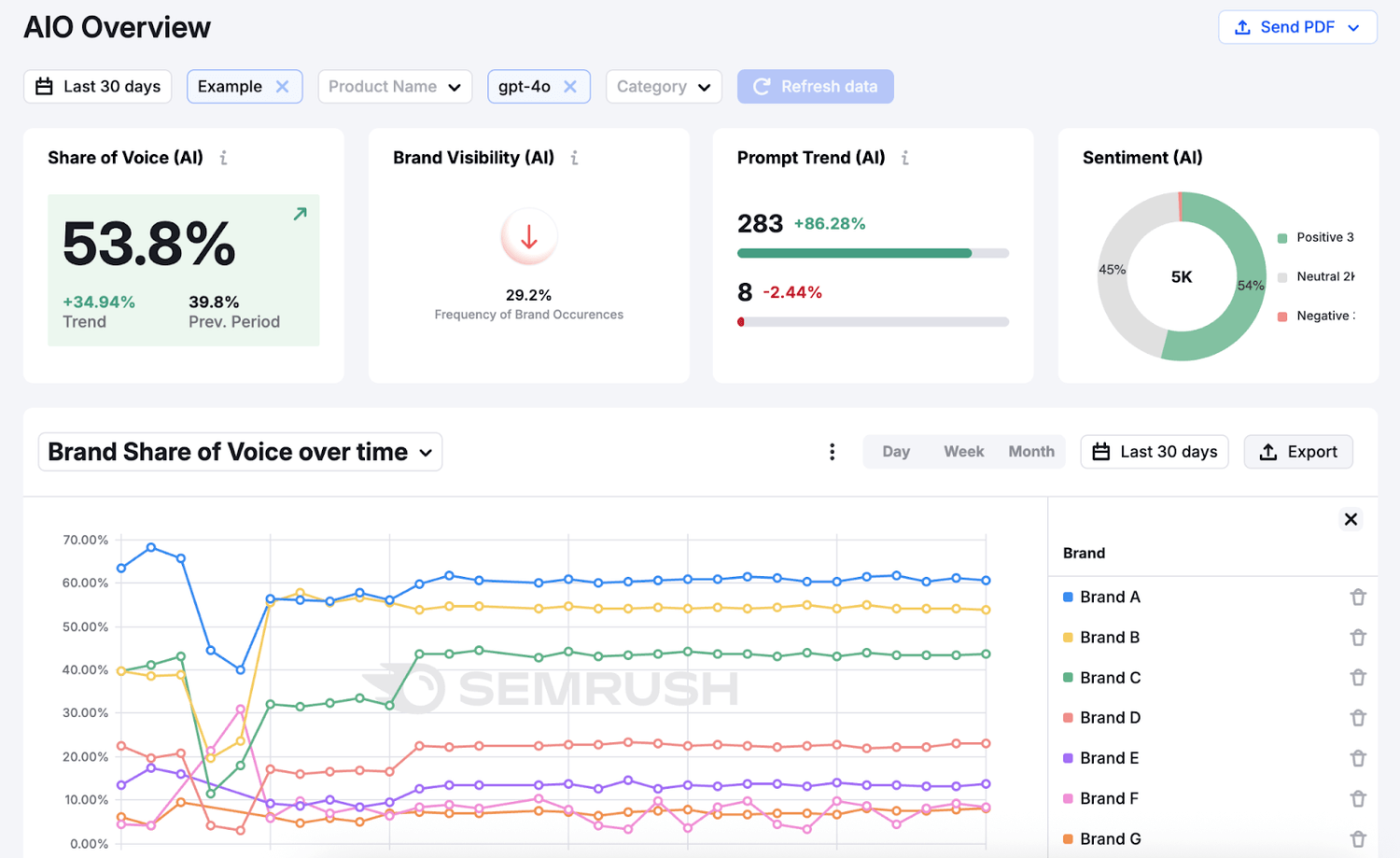
We have reached the point where optimizing for Googlebot is only half the job. We are now optimizing for an entire ecosystem of AI agents. This is where the AI Visibility Index and AI Search Results tool become the most important assets in your toolkit.
Understanding RAG and LLM Indexing
To understand AI visibility, you have to understand Retrieval-Augmented Generation (RAG). LLMs like ChatGPT and Gemini don't just "know" things; they "retrieve" information from a trusted index of web content to generate their answers.
If your brand is mentioned in a ChatGPT response, you have been included in the "Training Set" or the "Retrieval Set." If you are being displaced, meaning the AI gives the answer and doesn't cite you, you are losing the brand-building battle.
The Lily Ray Correlation
Industry analyst Lily Ray has documented a vital trend: sites that suffer from "Helpful Content" declines in Google often see a simultaneous decline in ChatGPT citations. This proves that the "Quality Signals" Google uses are very similar to the "Trust Signals" AI models use. If one drops, the other is likely to follow.
The AI Search Results Tool: What to Track
Semrush One allows you to track your "Share of Model" across:
ChatGPT: Are you the recommended solution in a "best of" query?
Perplexity: This "answer engine" relies heavily on citations. If you aren't there, your competitors are owning your narrative.
Gemini & Google AI Overviews: This is the bridge between traditional and AI search.
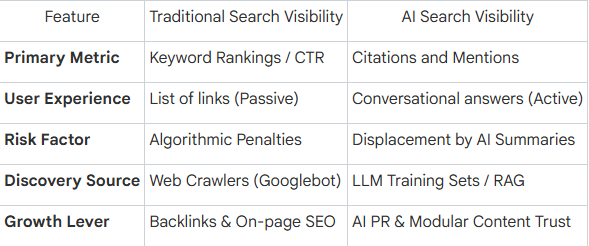
Strategic Recovery: Prioritizing Growth in a Volatile Market
Recovery is not about "fixing" everything at once. It’s about prioritization. By synthesizing traditional SEO data with AI visibility metrics, you can identify where your business is at the highest risk of total displacement.
The Power of Scale: The Semrush Database
When you make a strategic decision in Semrush One, you aren't guessing. You are leveraging one of the world's most massive marketing datasets.
25 Billion+ Keywords: This scale ensures you see the long-tail shifts that smaller tools miss.
500 Trillion+ Backlinks: Authority is the currency of the AI era. You need to know exactly who is "voting" for your content.
500 Million+ Domain Profiles: Understanding the global landscape allows you to see how updates affect different industries before they hit yours.
Synthesizing the Data
The "Recovery Workflow" looks like this:
1. Identify Vulnerable Keywords: Use Position Tracking to find high-volume keywords where your ranking is slipping.
2. Check AI Displacement: Use AI Search Results to see if an AI Overview is now occupying that SERP real estate.
3. Prioritize the Gap: If a keyword has high displacement risk, focus your content on "Expert Perspectives" that an AI cannot easily replicate. If displacement is low, focus on traditional "Technical Debt" fixes via Site Audit.
Measure and grow everywhere you're discovered. That is the mantra of Semrush One.
The 360-Degree Marketing View (Toolkits & Solutions)
To win the reckoning, you have to stop thinking of SEO as a silo. The "Quality Signals" that Google and LLMs look for are increasingly holistic. They look for brand mentions, social proof, and authoritative PR.
The Semrush One ecosystem provides this 360-degree view through specialized toolkits:
SEO & Local: This is your core. It includes Backlinks analysis to build authority and Local Marketing Hub features like Listing Management. If you aren't in the "top three" on Google Maps, you don't exist to local searchers.
Content & Social: Use the SEO Writing Assistant to create "AI-ready" content that scores high for readability and tone. Track influencer performance to ensure your brand is being discussed in the right circles, signals that LLMs crave.
Advertising & AI PR: This is the secret weapon for AI visibility. LLMs trust "high-authority media." Use the AI PR toolkit to find relevant media outlets that are already cited frequently by ChatGPT and Gemini. Launching an outreach campaign here isn't just about a backlink; it's about getting your brand into the LLM's "Trusted Source" list.
Expert Social Proof
Don’t just take my word for it. The industry's top minds rely on this ecosystem to navigate volatility:
“I've been using Semrush for 7+ years now and heavily rely on it to help me move whatever site I'm working on to the top of Google.” — Casey Camilleri Marx, Digital Marketing Director, Nlyte Software
“When it comes to pure value, Semrush wins... you get a fully-featured SEO software suite AND Google Ads software for the same monthly price.” — Brian Dean, Founder, Backlinko

Conclusion: From Volatility to Visibility
We are currently in the most transformative period in the history of search. The "unconfirmed updates" and the "AI displacement" we see today are not signs that SEO is dying, they are signs that it is evolving. Success in this era requires a unified approach. You cannot optimize for a human and ignore the AI agent, and you cannot build a brand on a technical foundation that is crumbling.
To lead the reckoning, you must move from a state of reaction to a state of command.
1. Audit your foundation: Use Site Audit to clear your technical debt today.
2. Track the noise: Set up Position Tracking for your most vital clusters.
3. Own the AI space: Use the AI Visibility Index to see where the new generation of searchers is discovering your brand.
With access to the world's largest AI-driven marketing database, you have the ability to see insights your competitors will never see coming. Stop wondering why your traffic is moving. Use Semrush One to decide where it goes next.



Created with © Systeme.io
Disclaimer: This page contains affiliate links. If you purchase through these links, we may earn a commission
at no extra cost to you. We only recommend tools we trust.