How to Optimize Your Website for ChatGPT Recommendations
How to Optimize Your Website for ChatGPT Recommendations
Search has changed.
People aren’t just typing keywords into Google anymore. They’re asking full questions inside ChatGPT. They’re comparing tools, looking for recommendations, and making buying decisions inside AI conversations.
And here’s the uncomfortable truth: if your brand isn’t being mentioned in those answers, you’re invisible.
This guide will show you exactly how to optimize your website for ChatGPT recommendations and how to Grow Your Brand’s Visibility in AI Search using practical, proven strategies. No fluff. No recycled SEO clichés. Just what actually matters.
Why ChatGPT Recommendations Matter More Than Rankings
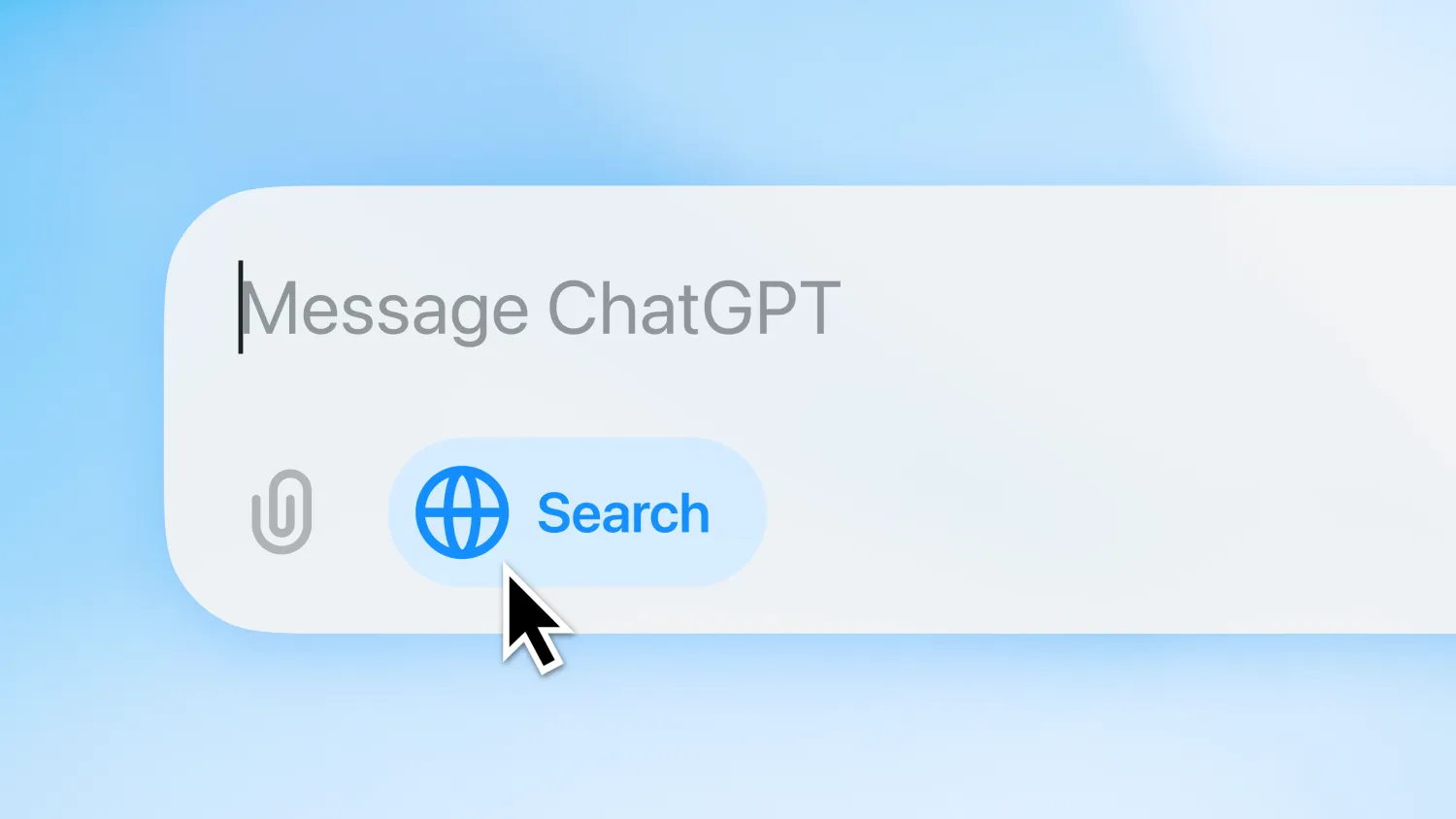
Traditional SEO was about getting one of ten blue links.
AI search is different. Instead of showing options, it gives synthesized answers. Often, it names specific brands, tools, or sources directly.
That changes everything.
When ChatGPT recommends a product, software, or company:
It compresses research time.
It builds instant trust.
It influences buying decisions.
It often removes the need to click elsewhere.
If your competitor is consistently mentioned and you aren’t, they win by default.
So the real question isn’t “How do I rank?”
It’s:
How do I become a recommended source?
First, Understand How ChatGPT Chooses What to Mention
Before optimizing anything, you need to understand how AI models surface brands.
ChatGPT doesn’t rank pages the way Google’s old algorithm did. It relies on:
1. Patterns in training data
2. Consensus across authoritative sources
3. Entity relationships
4. Structured and contextual clarity
5. Real-time retrieval (depending on version and integration)
It looks for signals like:
Consistent brand mentions across reputable sites
Clear descriptions of what you do
Association with specific topics
Strong contextual relevance
Authoritative citations
It doesn’t “reward” keyword stuffing.
It recognizes patterns of trust.
If your brand is repeatedly associated with a topic in reliable contexts, you become part of the answer.
Step 1: Clarify Your Entity Identity
Most websites fail here.
They don’t clearly define what they are.
In AI search, you are not just a website. You are an entity.
An entity has:
A name
A category
A purpose
Recognizable attributes
Relationships to other entities
For example:
Instead of saying:
“We help businesses grow online.”
Say:
“AI Visibility is a digital marketing platform that helps SaaS companies optimize for AI search engines like ChatGPT and Google AI Overviews.”
That sentence does five important things:
Defines category (digital marketing platform)
Defines audience (SaaS companies)
Defines outcome (optimize for AI search engines)
Names related entities (ChatGPT, Google AI Overviews)
Establishes topical focus (AI search optimization)
Action Step
Create a clear, single-sentence entity definition and place it:
On your homepage
In your About section
In your author bio
In your schema markup
Consistency builds recognition.
Step 2: Build Topical Authority Around One Core Theme
If you want ChatGPT to recommend you for “AI visibility,” you must deeply own that topic.
Not vaguely. Not occasionally.
Comprehensively.
That means creating:
Pillar pages
Supporting cluster articles
FAQ content
Use cases
Technical guides
Strategic breakdowns
Think in clusters, not standalone posts.
Example: AI Visibility Topic Cluster
Pillar:
What Is AI Visibility?
Supporting:
How AI Search Works
Entity-Based SEO Explained
How to Rank in AI Overviews
Technical SEO for LLM Crawlers
AI Content Optimization Framework
AI Search Audit Checklist
When ChatGPT encounters repeated associations between your brand and a specific topic, you strengthen your authority graph.
This is how you Grow Your Brand’s Visibility in AI Search.
Step 3: Optimize for Context, Not Just Keywords
Old SEO thinking:
Insert the keyword 12 times.
Modern AI thinking:
Build contextual depth.
ChatGPT understands:
Synonyms
Topic relationships
Semantic meaning
Question variations
Instead of obsessing over exact-match phrases, expand your coverage.
If your topic is AI visibility, also cover:
LLM optimization
Conversational search
Zero-click search
Entity SEO
AI answer engines
Structured data for AI
When your content maps the entire landscape, you become a high-confidence source.
Step 4: Structure Content for AI Retrieval
AI systems favor clarity.
Messy formatting hurts you.
Here’s what helps:
1. Clear Headings (H2, H3, H4)
Each section should answer one question.
2. Direct Definitions
Start sections with clean, quotable definitions.
Example:
“Entity SEO is the practice of optimizing your content around identifiable concepts rather than isolated keywords.”
That sentence can be extracted easily.
3. Lists and Frameworks
AI models love structured breakdowns:
Step-by-step processes
Numbered frameworks
Bullet-point summaries
4. FAQ Sections
Include natural-language questions and concise answers.
This increases snippet probability and improves AI extraction.
Step 5: Strengthen Off-Site Authority Signals
You cannot rely on your website alone.
ChatGPT’s training and retrieval systems rely heavily on:
Media mentions
Industry blogs
Authoritative directories
Podcast appearances
Research citations
If your brand only exists on your own site, your authority graph is weak.
What You Should Do
Publish guest articles on reputable industry websites.
Contribute quotes to expert roundups.
Get mentioned in comparison posts.
Earn backlinks from trusted domains.
Participate in industry discussions.
The goal is simple:
Create repeated, credible third-party mentions tied to your core topic.
Authority is consensus.
Step 6: Use Structured Data to Reinforce Entity Signals
Schema markup matters more in AI search than most people realize.
It clarifies:
Who you are
What you offer
Who wrote the content
What the page is about
Key schema types to implement:
Organization
Article
FAQ
Product (if relevant)
Person (for authors)
This strengthens entity recognition and improves crawl interpretation.
AI systems prefer clarity over guesswork.
Step 7: Create “Recommendation-Ready” Content
Ask yourself:
If someone asked ChatGPT:
“What’s the best platform for AI visibility optimization?”
Would your website clearly justify being mentioned?
To increase recommendation likelihood:
1. Publish Comparison Content
Your tool vs competitors
Industry alternatives
“Best tools for…” guides
2. Highlight Clear Differentiators
State why you are different.
Not vaguely. Specifically.
Example:
“We focus exclusively on AI search visibility, not just traditional SEO.”
Clarity improves extractability.
3. Include Use Cases
Show:
Who it’s for
What problem it solves
Expected outcomes
Specificity improves recommendation confidence.

Step 8: Monitor Your AI Presence
You can’t improve what you don’t measure.
Regularly test prompts like:
“Best tools for AI search optimization”
“How do I optimize for ChatGPT?”
“Top AI visibility platforms”
Track:
Are you mentioned?
Who is mentioned instead?
What patterns do top brands share?
Look for:
Authority signals
Structured clarity
Deep topic coverage
Strong brand repetition
Reverse engineer what works.
Step 9: Align Technical SEO With AI Crawlers
Technical foundations still matter.
Ensure:
Clean site architecture
Fast load speed
Mobile optimization
Clear internal linking
XML sitemap
Proper indexing
AI bots rely on accessible content.
If your pages are difficult to crawl or poorly structured, you reduce visibility potential.
Step 10: Focus on Brand, Not Just Traffic
This is the biggest mindset shift.
AI recommendations favor recognizable brands.
If your content is technically optimized but your brand is forgettable, you lose.
Invest in:
Consistent messaging
Strong positioning
Clear category ownership
Visual identity
Thought leadership
The goal is not just to rank.
It’s to be remembered.
A Simple Framework to Grow Your Brand’s Visibility in AI Search
Here’s the process distilled:
1. Define your entity clearly.
2. Own a narrow, specific topic.
3. Build deep content clusters.
4. Structure content cleanly.
5. Earn authoritative mentions.
6. Implement schema markup.
7. Publish recommendation-ready pages.
8. Monitor AI answers regularly.
9. Maintain strong technical foundations.
10. Strengthen brand positioning.
Repeat consistently.
Authority compounds.
Common Mistakes That Kill AI Visibility
Let’s avoid these:
Writing generic AI content with no differentiation
Publishing random topics with no cluster strategy
Ignoring structured formatting
Relying only on backlinks
Not defining your entity clearly
Treating AI visibility as a short-term tactic
AI visibility is a system, not a hack.
The Long-Term Play
ChatGPT recommendations are not random.
They reflect:
Consistency
Clarity
Authority
Depth
Consensus
If you systematically build those signals, your probability of being mentioned increases over time.
It’s not about tricking the algorithm.
It’s about becoming the obvious answer.
Final Thoughts
AI search is not the future.
It’s already here.
If your brand isn’t actively optimizing for AI systems, you are slowly becoming invisible in the spaces where decisions are being made.
The opportunity is massive because most businesses are still thinking in old SEO terms.
Start now.
Clarify your entity.
Deepen your authority.
Structure your content.
Earn your mentions.
That’s how you optimize your website for ChatGPT recommendations.
And that’s how you Grow Your Brand’s Visibility in AI Search in a world where answers matter more than rankings.
If you build this correctly, you won’t just get traffic.
You’ll get chosen.



Created with © Systeme.io
Disclaimer: This page contains affiliate links. If you purchase through these links, we may earn a commission
at no extra cost to you. We only recommend tools we trust.