How to Prepare Your SEO Strategy for 2026: AI Visibility Guides
How to Prepare Your SEO Strategy for 2026: AI Visibility Guides
The Great Search Reset: Why 2026 is Different
The search landscape hasn't just changed; it’s been completely reset. With Google’s AI Overviews reaching 2 billion users and AI Mode active in over 200 countries, the transition from "Blue Links" to AI-generated answers is no longer a future projection, it is our current reality.
If you are still optimizing solely for a top spot on a traditional results page, you are missing the massive upside of the new discovery ecosystem. In my experience running experiments across various properties, I've seen that traffic doesn't always correlate with where you rank in Google anymore. SEO is now more like social media; it’s about getting eyeballs on your brand wherever they happen to be looking. We have shifted from narrow keyword targeting to "Search Everywhere Optimization" and "Generative Engine Optimization (GEO)."
Key Perspective The traditional Google-only funnel is dead. Modern users now engage with 7+ platforms for more than 4 hours daily. For high-stakes purchases, research behavior is driven by Loss Aversion, the psychological reality that we feel the pain of a "bad buy" twice as intensely as the pleasure of a good one. This drives buyers to check 25+ sources (Reddit, YouTube, TikTok, and AI assistants) to de-risk their decision before a major investment.
The Paradigm Shift: From Keywords to Entities
In 2026, Large Language Models (LLMs) and search engines prioritize who you are over what you publish. We have moved from exact-match keywords to "Entity-based" SEO. Entities are a mental model of brands, people, and concepts that AI associates together.
Take the journey of Exploding Topics. We went from not optimizing for LLMs at all to ranking in countless AI overviews because we focused on becoming an entity. By consistently appearing alongside terms like "trend detection" and "early trend spotting" in news articles, research write-ups, and YouTube transcripts, the brand became the default candidate for AI answers. Similarly, Backlinko is now cemented in the AI "memory" as the entity for "actionable SEO strategies" rather than just generic keyword research.
3-Step Checklist for Entity Seeding:
1. Choose a Hyper-Specific Concept: Don’t try to own "marketing." Choose an idea like "early trend detection" that can be repeated without looking forced.
2. Create an Entity Hub: Build a single page or series on your site that explains this concept better than anyone else. Make it so unique that an LLM says, "I've never seen this insight before; let’s train on this."
3. Seed the Association via Independent Sources: For LLMs to trust the association, they must see it on third-party sites. This includes being mentioned in comparison posts, Reddit threads, and even small podcasts. Crucial insight: Even small YouTube channels and podcasts count because their show notes, transcripts, and descriptions reinforce the entity link for the AI.
Building the Technical Foundation for 2026
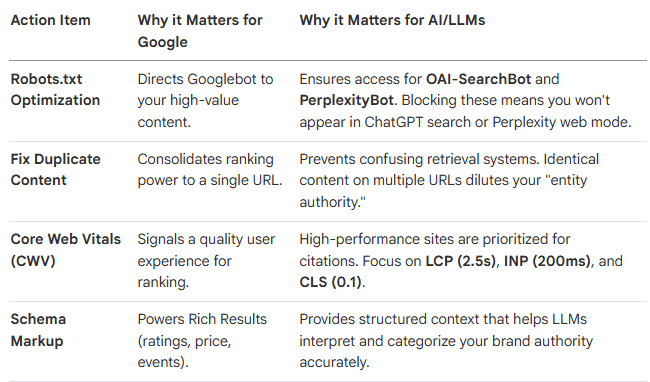
Technical SEO is no longer just about helping a crawler; it’s about ensuring you aren't invisible to the models training the future of search. If your technical foundation is shaky, you aren't just losing rankings, you're being excluded from the AI data set entirely. Current data shows that 96% of websites fail at least one Core Web Vitals (CWV) test. If you are in that 96%, you are handing your traffic to competitors.
The 2026 Technical Audit Checklist
Structuring Content for "AI Retrieval"
To win AI citations, you must stop padding content with fluff. The days of the "Chicken Parmesan recipe that starts with a trip to Tuscany in 1985" are over. Your goal is to make content easy for an AI to extract and restate.
Use Descriptive Headings: Use H2/H3 tags as clear signals of what information follows.
Self-Sufficient Paragraphs: Ensure each block of text conveys a complete thought that can stand alone if extracted as a snippet.
The "Direct Answer" Method: Provide a 40–60 word summary immediately after a heading.
State Facts Confidently: Avoid "hedging" or flowery buzzwords. Use clear, declarative language. AI models prioritize confident, direct answers over vague or overly academic phrasing.
The "Search Everywhere" Framework
Search Everywhere Optimization recognizes that curiosity is routed through multiple platforms. If you aren't present when that curiosity sparks, you lose the chance to influence the purchase.
Simple Framework for Audience Research:
Ask 5–10 Recent Buyers: Literally ask them: "Walk me through how you researched us before buying." They will reveal the Reddit threads and YouTube comparisons that actually moved the needle.
Map Intent Pillars: Identify the real questions (e.g., "Is [Brand] worth the $10k price tag?").
Validate via Content Volume: Search your topic on TikTok, Pinterest, and Reddit. If there is minimal conversation, that's a signal to redirect your efforts elsewhere.
Content Strategy: Optimizing the "Conversation"
Traditional keyword research is your starting point, but "Intent Pillars", the human conversation behind the search, are the finish line.
Traditional Keyword The Intent Pillar Conversation
"GEO" "Will SEO still matter if people use ChatGPT instead of Google?"
"Project Management" "How do I stop my remote team from missing deadlines?"
Angle Optimization Technique: To become the "well-rounded" source that AI loves to cite, look at the "People Also Ask" (PAA) section and AI Overview subtopics. Ensure your content addresses every one of these angles. If you cover all subtopics, you dramatically increase your chance of being used as a reference.
Brand Authority: Your Most Important SEO Asset
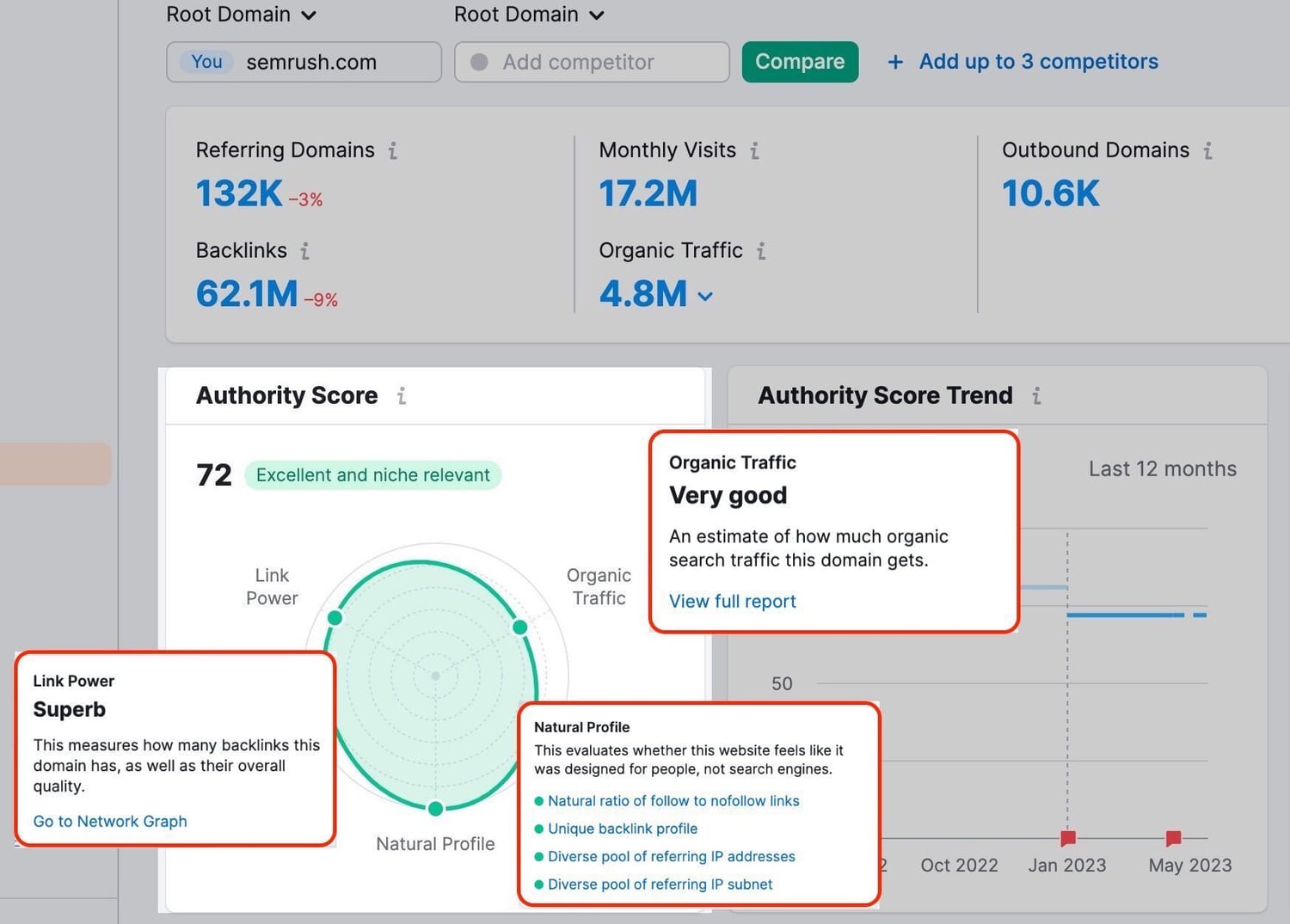
In 2026, your reputation is a ranking factor. LLMs prioritize brand authority to reduce misinformation. Here is the shocker: ChatGPT pulls pages ranked 21+ in traditional search nearly 90% of the time. This means that even if you aren't on page one of Google, a strong brand reputation can get you cited as a primary source in AI answers.
Tactics to Increase Brand Awareness with LLMs:
Contextual Alignment: Ensure mentions in high-authority media associate your brand with specific values (e.g., "Sustainability").
Earned Media Focus: 61% of AI mentions come from earned media (editorial coverage). PR and SEO must merge into a single "Visibility" strategy.
Structured Data: Maintain a well-sourced Wikidata entry and use schema to help AI systems recognize your brand as a reliable entity.
Advanced Growth Tactics for 2026
Programmatic SEO: Use templates for unique datasets (job boards, real estate). The key is adding unique value beyond the raw data to satisfy search intent.
E-E-A-T & Expert Collaboration: Real expertise is the only way to beat generic AI content. AI can detect author bios, credentials, and experience-based insights. Working with subject-matter experts is now a survival requirement.
Schema for Rich Results: Beyond just helping AI, schema drives higher CTR by showing ratings and prices directly in the SERP.
Measuring Success: New Metrics for a New Era
Forget "Views." They are a vanity metric. To prove the value of a 2026 strategy, we focus on business impact and brand preference.
The 2026 SEO Scorecard
Organic Traffic Growth: Baseline growth from search engines (Google Analytics).
Branded Search Volume: Your North Star. If people are searching for your brand name, your "Search Everywhere" strategy is working.
AI Visibility: Tracking citations in ChatGPT, Gemini, and Google AI Mode.
Conversions: The ultimate KPI. AI search visitors are 4.4x more valuable (higher conversion rates) than traditional search visitors because AI responses act as personalized recommendations.
Frequently Asked Questions (FAQ)
What SEO Strategies Will Dominate in 2026?
The dominant SEO strategies for 2026 focus on Generative Engine Optimization (GEO) and Search Everywhere Optimization. Key tactics include:
AI Retrieval Structuring: Formatting content with descriptive headings (H2/H3) and self-sufficient paragraphs to ensure it is easily extracted and cited by AI Overviews and AI Mode.
Entity-Based SEO: Shifting from keyword targeting to entity association, where your brand is consistently linked with specific, high-value concepts (e.g., "early trend detection") across the web.
Search Everywhere Optimization: Building visibility across all platforms where audiences research, including YouTube, TikTok, Reddit, and Amazon, to ensure your brand is present when curiosity sparks.
Brand-First Ranking: Leveraging PR and earned media to build authority, as LLMs prioritize brands mentioned in trusted, third-party publications.
Creator Partnerships: Scaling content production through partnerships with trusted creators who provide the native voice and audience trust that brands cannot replicate in-house.
Why Is It Crucial to Adapt Your SEO Strategies for 2026?
Adapting is critical because the search landscape is moving toward a "zero-click" and AI-first environment.
Visibility Shifts: AI answers now appear above traditional search results, reaching over 2 billion users monthly. If you aren't cited in these answers, your organic visibility will likely drop.
High-Value Traffic: Research indicates that AI search visitors are 4.4x more valuable than traditional search visitors, often converting at higher rates because AI responses feel like personalized recommendations.
Multi-Platform Behavior: Modern audiences engage with 7+ platforms daily; relying solely on Google rankings is no longer sufficient to reach users throughout their entire research journey.
Choice Fatigue: As markets become more saturated, brand trust and familiarity are essential for users to overcome choice fatigue and for AI models to recommend your brand.
When Should You Start Implementing SEO Strategies for 2026?
You should start immediately.
Compounding Results: SEO efforts typically take 3 to 6 months to show significant results, and the authority required for AI visibility compounds over time.
Owning Conversations Early: Traditional SEO waits for search volume, but 2026 strategies require owning emerging conversations before they hit the mainstream to become the "default authority".
Foundation Building: Acting now allows you to build the technical and authoritative foundation necessary for an AI-dominant future where LLM traffic is projected to surpass traditional search.
Where to Find the Best Resources for SEO Strategies in 2026?
The most effective resources combine specialized tools with direct audience insights:
Advanced Toolkits: Tools like the Semrush AI Visibility Toolkit and AI PR Toolkit are essential for tracking how LLMs talk about your brand and finding authoritative media outlets.
Trend Detection: Exploding Topics is a key resource for identifying emerging conversations and seeing which platforms (like TikTok or Reddit) are driving those trends.
Direct Audience Research: The most reliable data comes from interviewing recent buyers to map their specific research journey across different digital touchpoints.
Industry Education: The Semrush Academy and Blog offer expert-reviewed guides and practical techniques for navigating the shift to AI-driven SEO.
How Will SEO Strategies Change by 2026?
SEO is evolving from "ranking pages" to "owning conversations" and managing brand reputation.
From Keywords to Intent Pillars: Instead of targeting isolated keywords, marketers will focus on Intent Pillars, the underlying problems or questions a user is trying to solve.
Merge of PR and SEO: PR and SEO are becoming a single strategy where earned media mentions and social conversations are primary signals for AI models to determine which brands to trust.
Human-Centric Content: As AI content becomes ubiquitous, search systems will prioritize E-E-A-T (Experience, Expertise, Authoritativeness, and Trustworthiness), rewarding content written or reviewed by demonstrable experts.
New Success Metrics: Success will be measured by branded search volume, AI visibility, and "Search Everywhere" presence rather than just traditional keyword rankings.
Conclusion: The Future-Proof Mindset
As Google’s Danny Sullivan famously said: "Good SEO is good GEO." The fundamentals, technical health, quality content, and authority, remain the same, but the delivery has changed.
You must treat Search Everywhere as an Operating Model, not a marketing experiment.
Experiments can be cut; operating models are defended. Stop waiting for the traffic to drop before you adapt. Pick two techniques, perhaps a technical audit of your robots.txt or seeding an entity hub, and execute them this week.



Created with © Systeme.io
Disclaimer: This page contains affiliate links. If you purchase through these links, we may earn a commission
at no extra cost to you. We only recommend tools we trust.