Semrush for Retail and Ecommerce SEO Strategy: The AI-Ready Guide
Introduction: The Evolution of Digital Shelves
In the current retail landscape, the path to purchase is no longer a straight line; it is a multi-dimensional journey across what we call "digital shelves." Modern shoppers oscillate seamlessly between traditional Google searches, generative AI assistants like ChatGPT, Gemini, and Perplexity, and algorithmic social media feeds. This fragmentation means that if your product isn't visible where the shopper is currently "shelved," you don't just lose a click, you lose the customer lifetime value.
To win in this volatile environment, enterprise brands must move beyond siloed marketing tactics. Success requires a unified strategy that bridges the gap between legacy SEO authority and the burgeoning world of AI-driven visibility. This is the core thesis of modern retail growth: you must dominate the search engine results page (SERP) while simultaneously securing the primary recommendation from AI agents.
Semrush One has emerged as the leading platform specifically designed to unify these disciplines. By providing a single source of truth for both search engine performance and AI visibility, it allows retail leaders to protect their market share and capture demand at every touchpoint. This guide outlines a comprehensive Semrush for Retail and Ecommerce SEO Strategy designed to transform visibility into measurable revenue growth.
The Rise of Agentic Commerce and AI Search Visibility
The retail industry is entering the era of "Agentic Commerce." This refers to a shift where consumers delegate the heavy lifting of product research, price comparison, and even purchasing to AI agents. In this world, the "zero-click" buy is the ultimate prize. If a shopper asks ChatGPT for the "best eco-friendly hiking boots for wide feet," and your brand isn't in the response, you are effectively invisible to that consumer. The economic risk of exclusion is total; you are not just lower on the list, you aren't on the list at all.
The AI Visibility Toolkit and AI Visibility Index
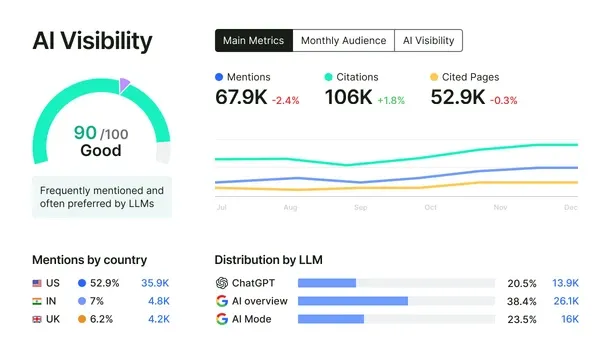
To counter this risk, Semrush offers the AI Visibility Toolkit. This suite allows brands to track their presence within the LLM (Large Language Model) ecosystems. By utilizing the AI Visibility Index, consultants can quantify a brand's "share of voice" within AI responses compared to traditional search.
Professional Workflow: Auditing AI Search Health
Connect via Semrush MCP: Use the Semrush MCP (Model Context Protocol) to connect the platform’s massive dataset directly to your internal AI assistants, ensuring your agents are working with the most accurate, real-time market data.
Monitor Brand Recommendations: Navigate to the AI Visibility Toolkit to track how often ChatGPT, Perplexity, and Gemini recommend your products during high-intent research queries.
Analyze AI Sentiment: Go beyond simple mentions. Use the AI Brand Sentiment features to see if the AI is describing your products with positive, neutral, or negative language.
Execute GEO (Generative Engine Optimization): Identify gaps where competitors are being recommended over you. Create targeted, authoritative content that addresses the specific data points LLMs look for to include a brand in their "buying advice" summaries.
Advanced Keyword Strategy: Finding High-Intent Buyers
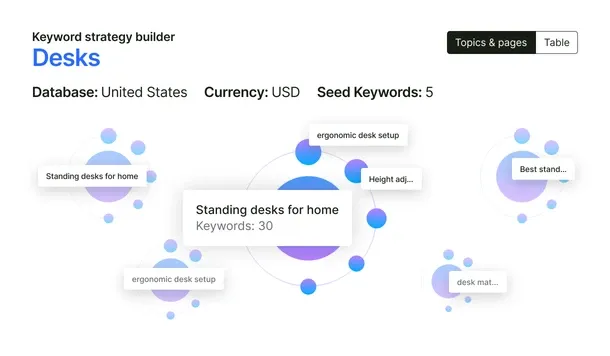
For a retail giant, broad category terms like "shoes" are vanity metrics. The real revenue is hidden in high-intent, long-tail queries. An effective strategy focuses on capturing the shopper at the moment of decision-making.
Deep Diving with the Keyword Magic Tool
The Keyword Magic Tool is the engine of discovery. It allows you to move past surface-level data to find the exact phrasing shoppers use. By filtering for "Intent" (specifically 'Transactional' and 'Commercial'), you can isolate the keywords that drive immediate ROI.
Professional Workflow: Building a High-Intent Keyword Map
Initial Discovery: Enter a seed category term in the Keyword Magic Tool.
Filter by Intent: Select the "Transactional" filter to see queries like "buy," "price," or "sale."
Refine by Difficulty: Use the "Keyword Difficulty (KD%)" filter to identify low-hanging fruit, terms with high volume but manageable competition.
Strategic Synthesis: Send these keywords directly to the Keyword Strategy Builder. This tool transforms raw data into a structured SEO content plan, clustering keywords into "pillows" and "pillars" to ensure your site build-out matches the user's mental model.
Leveraging Ecommerce Keyword Analytics
For brands with a multi-channel presence, the Ecommerce Keyword Analytics tool is a critical asset. It surfaces the search terms driving sales on major third-party platforms like Amazon. This allows you to optimize your Shopify or big-commerce store based on actual "on-platform" buying behavior, bridging the gap between search intent and marketplace reality.
Comparison: Category vs. High-Intent Keywords
Broad Category Queries: Terms like "digital cameras" or "skincare." These have high volume but carry the risk of high bounce rates and low conversion.
High-Intent Buying Keywords: Terms like "Sony Alpha a7 IV price" or "best retinol cream for sensitive skin." These signal a shopper who has finished their research and is ready to convert.
Competitive Intelligence: Reverse-Engineering Market Leaders
In ecommerce, your competitors' success is your best roadmap. By using Organic Research and the Keyword Gap tool, you can see the exact terms driving revenue for your rivals.
The Keyword Gap Strategy
The goal of a Keyword Gap analysis isn't just to see what you're missing, but to identify where your competitors are vulnerable.
Professional Workflow: Executing a Competitive Takeover
Input Domains: Enter your domain and up to four top competitors.
Select the 'Missing' Filter: This shows keywords where all your competitors rank, but you do not.
Sort by Volume and CPC: Prioritize terms that have high search volume and high Cost Per Click, as these are the most valuable "money keywords."
Strategic Bridge: Take these "Missing" keywords and funnel them into your Keyword Strategy Builder to immediately begin content production for the gaps.
Consultant’s Pro-Tip: The "Social Proof" UX Strategy Cody B., a Senior eCommerce Coordinator, suggests a tactical approach to competitive intelligence: "Even when I stumble onto a website that as a user I like the UX of, I'll often run it through [Semrush] to see how their site performs to try and find takeaways I can adopt in my own UX strategy." Action: Use the Traffic & Market Toolkit to identify which specific pages on a competitor's site are their top performers. Analyze the UX layout of those pages, where is the CTA? How is the product information structured?, and adopt these high-converting patterns into your own site design.
Technical SEO for Ecommerce: Protecting the Product Catalog
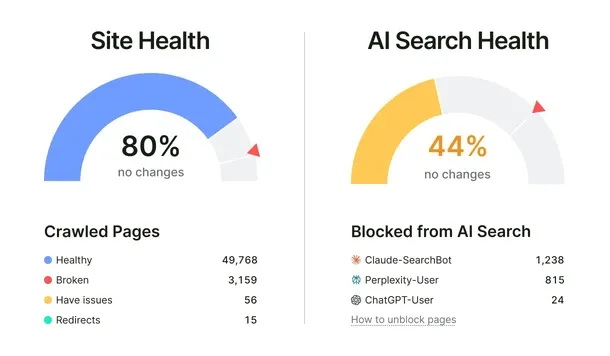
Technical integrity is the foundation of ecommerce. For a $2.3B marketplace like Chrono24, a single crawl error can lead to the "de-indexing" of thousands of luxury listings, resulting in immediate revenue loss.
Site Audit: Precision at Scale
The Site Audit tool is built to handle the complexity of hundreds of thousands of pages. It goes beyond basic checks to address the specific "crawl budget optimization" needs of large retailers.
Professional Workflow: Technical Health Prioritization
Navigate to the 'Issues' Tab: Filter by "Errors" to see the highest-priority fixes.
Fix Crawl Errors: Address 4xx and 5xx errors that prevent search bots from reaching your products.
Eliminate Duplicate Content: Ecommerce sites often generate duplicate descriptions across various filters and facets. Use the audit tool to identify these and implement proper canonical tags.
Optimize Page Speed: Identify slow-loading product pages. In retail, a one-second delay can result in a massive drop in conversion rates.
Sascha Weber, Head of SEO at Chrono24, emphasizes the need for this precision: "Running a $2.3B marketplace means you can't afford to guess. We need clarity across markets to make the right calls fast." The Site Audit provides this clarity by turning a million-page catalog into a prioritized checklist of fixes.
Granular Performance Tracking: Product-Level Precision
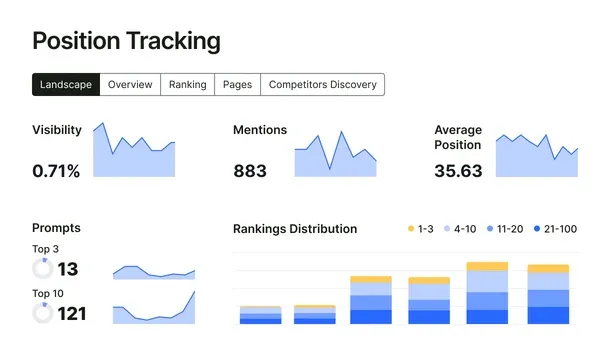
A "Senior Ecommerce Strategy Consultant" doesn't care about average rankings; they care about the ranking of the highest-margin products. Position Tracking allows for this level of granularity.
Real-Time Monitoring and Alerts
Ecommerce is volatile. Seasonal shifts, competitor promos, and Google algorithm updates can cause "SERP volatility" overnight.
Professional Workflow: Setting Up Performance Dashboards
Daily Position Tracking: Set up tracking for specific product URLs across desktop and mobile. Shopper behavior differs significantly between devices, and your rankings likely do too.
Geographic Specificity: Use Local Search tracking to see how your products appear to shoppers in specific regions.
Custom Alerts: Follow the lead of small business owner Max S., who uses rank position change email alerts. By knowing immediately when a high-margin product drops from the top 3, you can predict sales fluctuations and adjust your ad spend or SEO tactics in real-time.
Custom Dashboards: Use the White-label reporting feature to pull Site Audit health, Position Tracking, and Keyword Gap data into a single, executive-level dashboard for stakeholders.
Scaling with Semrush for Enterprise
For the 35% of Fortune 500 companies that rely on Semrush, the platform is more than a tool, it is an enterprise-wide visibility engine. Large retailers managing multiple sub-brands and international markets require a level of integration that standard tools cannot provide.
The Power of the Semrush API
For enterprise-level reporting, manual data entry is a relic of the past. Expert technical bloggers and consultants utilize the Semrush API to pull massive datasets directly into internal Business Intelligence (BI) tools (like Tableau or Looker).
This allows retailers to:
Correlate organic visibility directly with internal sales data.
Monitor "Share of Voice" across dozens of international markets simultaneously.
Automate competitive benchmarking for thousands of product categories.
By utilizing Semrush One, enterprise teams can maintain "clarity across markets," ensuring that every sub-brand is adhering to the same high standards of technical health and keyword strategy.
Real-World Success: From Growth to Global Dominance
The following case studies demonstrate the ROI of a unified Semrush strategy:
Chrono24: By utilizing the Site Audit and Organic Research tools to achieve clarity across diverse international markets, this luxury marketplace grew to over 500,000 monthly visits.
ForeFront Web: This agency focused on granular keyword research and technical health to grow a client's organic Shopify revenue by 71% in just 11 months.
Coalition Technologies: By early adoption of the AI Visibility Toolkit, they successfully boosted both AI-driven traffic and conversions for their retail clients, staying ahead of the "Agentic Commerce" curve.
Frequently Asked Questions about Ecommerce SEO
How does Semrush help ecommerce businesses specifically?
Semrush provides a "Full-Funnel" visibility strategy. It identifies the high-intent keywords shoppers use to research products, monitors the technical health of massive product catalogs to prevent revenue-sapping crawl errors, and tracks your brand’s "Share of Voice" in AI assistants like ChatGPT. It bridges the gap between traditional SEO and the new world of AI-driven commerce.
Can the platform track rankings at the individual product level?
Yes. The Position Tracking tool allows you to monitor specific URLs daily. This is critical for ecommerce because category-level data often hides the performance of individual high-margin items. Enterprise users can track multiple product lines across every global market they operate in, tying this granular visibility directly to ROI.
Does Semrush provide insights into AI shopping recommendations?
Absolutely. The AI Visibility Toolkit and the AI Visibility Index track how often and how positively your products appear in ChatGPT, Perplexity, and Gemini. This allows you to see if AI assistants are recommending your products or your competitors when shoppers ask for buying advice or product comparisons.
How do I find keywords that my competitors use but I don't?
You use the Keyword Gap analysis tool. By entering your domain alongside up to four competitors, you can filter for "Missing" or "Weak" keywords. This allows you to see every high-volume, high-intent term that is currently driving traffic to your rivals instead of you, which you can then funnel into the Keyword Strategy Builder to reclaim that market share.
Conclusion: Building a Future-Proof Retail Strategy
To dominate the digital shelf, a retail brand must master three pillars: high-intent keyword acquisition, technical site integrity at scale, and AI visibility. Fragmented tools lead to fragmented results. A unified platform like Semrush One is the only way to manage these complexities while maintaining the "clarity across markets" required for a $2B+ enterprise.
By leveraging technical audits to protect your catalog, competitive intelligence to reverse-engineer success, and the AI Visibility Toolkit to secure the recommendations of the future, you turn search into your most consistent, high-converting sales channel.
Start growing your online visibility today. Take control of your product discovery and protect your revenue by starting a free 7-day trial of Semrush.



Created with © Systeme.io
Disclaimer: This page contains affiliate links. If you purchase through these links, we may earn a commission
at no extra cost to you. We only recommend tools we trust.