7 Amazing Features of Semrush AI Search You Need to Know
7 Amazing Features of Semrush AI Search You Need to Know
Search marketing has reached a definitive turning point. We are no longer just optimizing for a list of ten blue links; we are architecting presence within a synthesized ecosystem. As an Expert AI Search Strategist, I’ve watched the industry shift from a "search, click, and read" workflow to a "prompt and answer" reality. In this new era, the benchmark for brand authority isn't just a high ranking, it is being cited as the foundational source for an LLM’s response.
Generative engines like ChatGPT, Perplexity, and Google’s AI Overviews (AIO) act as digital editors. They don’t just index information; they interpret, summarize, and curate it. For modern marketers, this requires a transition to Total Visibility: a strategy that ensures your brand is present across every search surface, from traditional SERPs to the conversational interfaces of Gemini and Claude.
To navigate this, you need more than traditional SEO tools. You need the Semrush AI Visibility Toolkit integrated within the Semrush One ecosystem. Below is a masterclass in the seven features that will define your success in the AI-first world.
The Dawn of the AI Search Era: Why Your Strategy Must Evolve
The traditional SEO playbook was built on the concept of information retrieval. Today, we are in the age of information synthesis. According to search strategist Carlos Silva, AI search is taking off because it provides "instant satisfaction" and "interactive exchanges." Users are moving away from fragmented keyword searches and toward complex, conversational prompts.
To understand why your strategy must evolve, we have to look at the fundamental architecture of how information is processed today:
Traditional Search vs. AI Search
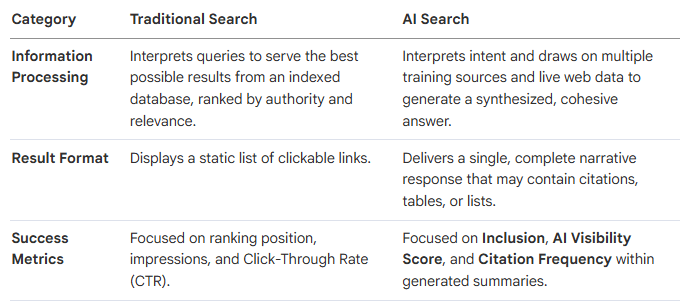
The Concept of Total Visibility
The "Post-Click" reality is here. Data shows that CTR can drop by as much as 15.5% for queries that trigger an AI Overview. However, as a Senior Content Architect, I argue that "inclusion is the new traffic." Being cited by an AI system is a massive branding win. It positions your brand as the "top-of-mind" expert, often driving later "navigational" searches, which have skyrocketed by 10.33% according to recent Semrush research. Total Visibility means owning the narrative before the user even considers clicking.
Feature 1: Visibility Overview – Your AI Search Flight Deck
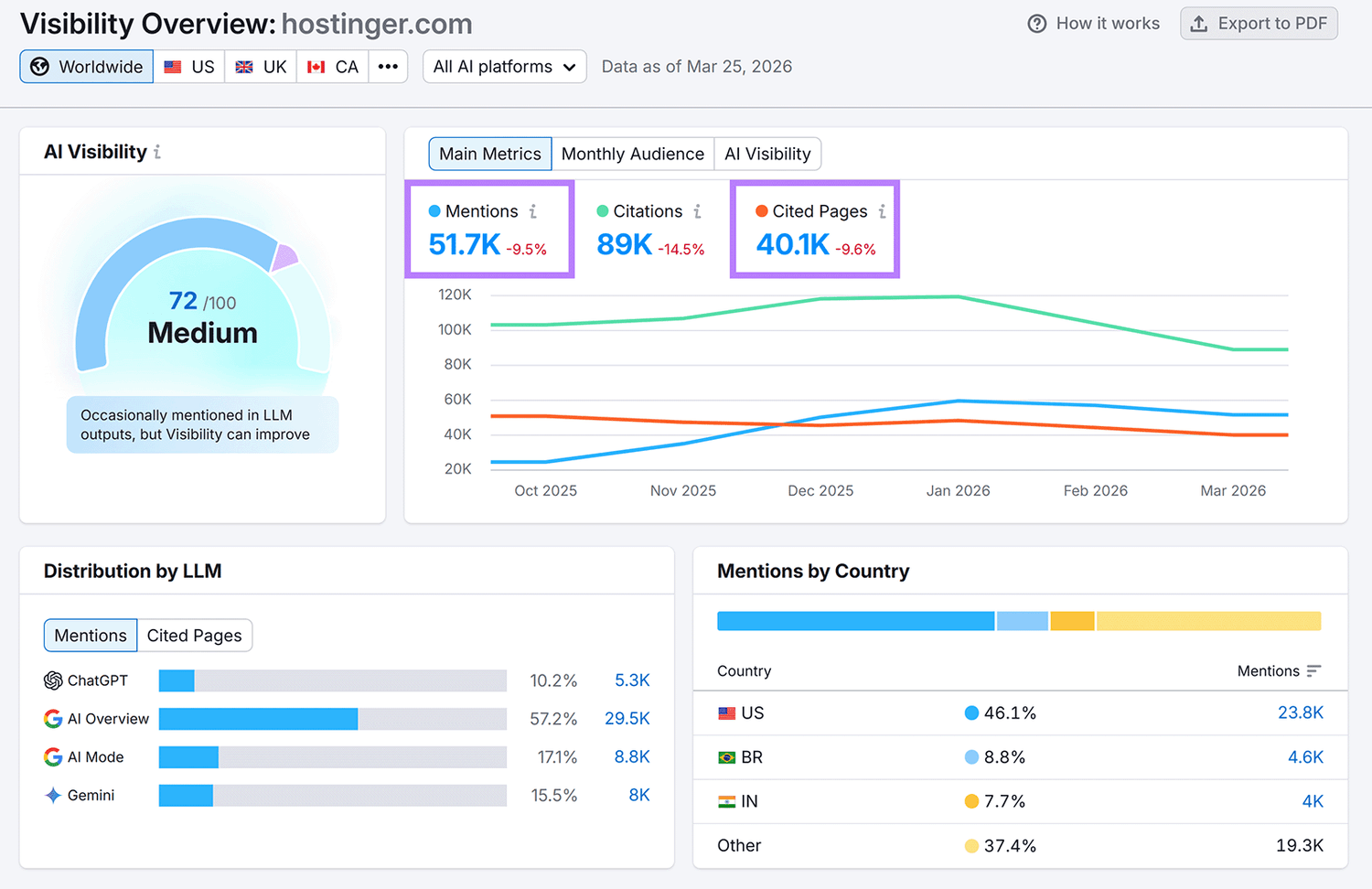
The Visibility Overview is the command center for any brand's Generative Engine Optimization (GEO) strategy. It provides a baseline assessment of your brand’s footprint across platforms like ChatGPT, Gemini, and Google AI Mode.
How to Benchmark Your Baseline
To begin, navigate to the AI Visibility Toolkit in the left-hand menu and select Visibility Overview. Enter your domain and select your target location. The tool will generate a dashboard that updates monthly, keeping a full history of your progress.
Key Metrics to Track:
AI Visibility Score: This is a proprietary metric that shows how often AI platforms mention your brand compared to competitors across relevant topics. If your AI Visibility Score is lower than your traditional Authority Score, it’s a signal that your content isn’t structured for LLM extraction.
Cited Pages: This shows the specific URLs from your domain that AI responses are referencing.
Mentions by LLM: This chart is critical for channel strategy. It breaks down which specific models (ChatGPT vs. Gemini vs. Perplexity) are favoring your brand.
The Five Strategic Lists
Scroll down below the main dashboard to discover five specific toggles that will define your content roadmap:
Performing Topics: These are your wins. Identify the subjects where you are already the dominant authority.
Topic Opportunities: This is your "gap list." It shows topics where competitors are mentioned, but your brand is absent.
Cited Sources: Discover which third-party sites (like Reddit, YouTube, or industry forums) are most cited in your niche.
Source Opportunities: Identify high-authority external sites that AI models cite when they mention your competitors. These are your primary targets for PR and outreach.
Cited Pages: Analyze the format of these pages. Are they tables? Lists? Summary-first articles? Use these as templates for future content.
Feature 2: Brand Performance & Sentiment Analysis – Owning Your Narrative
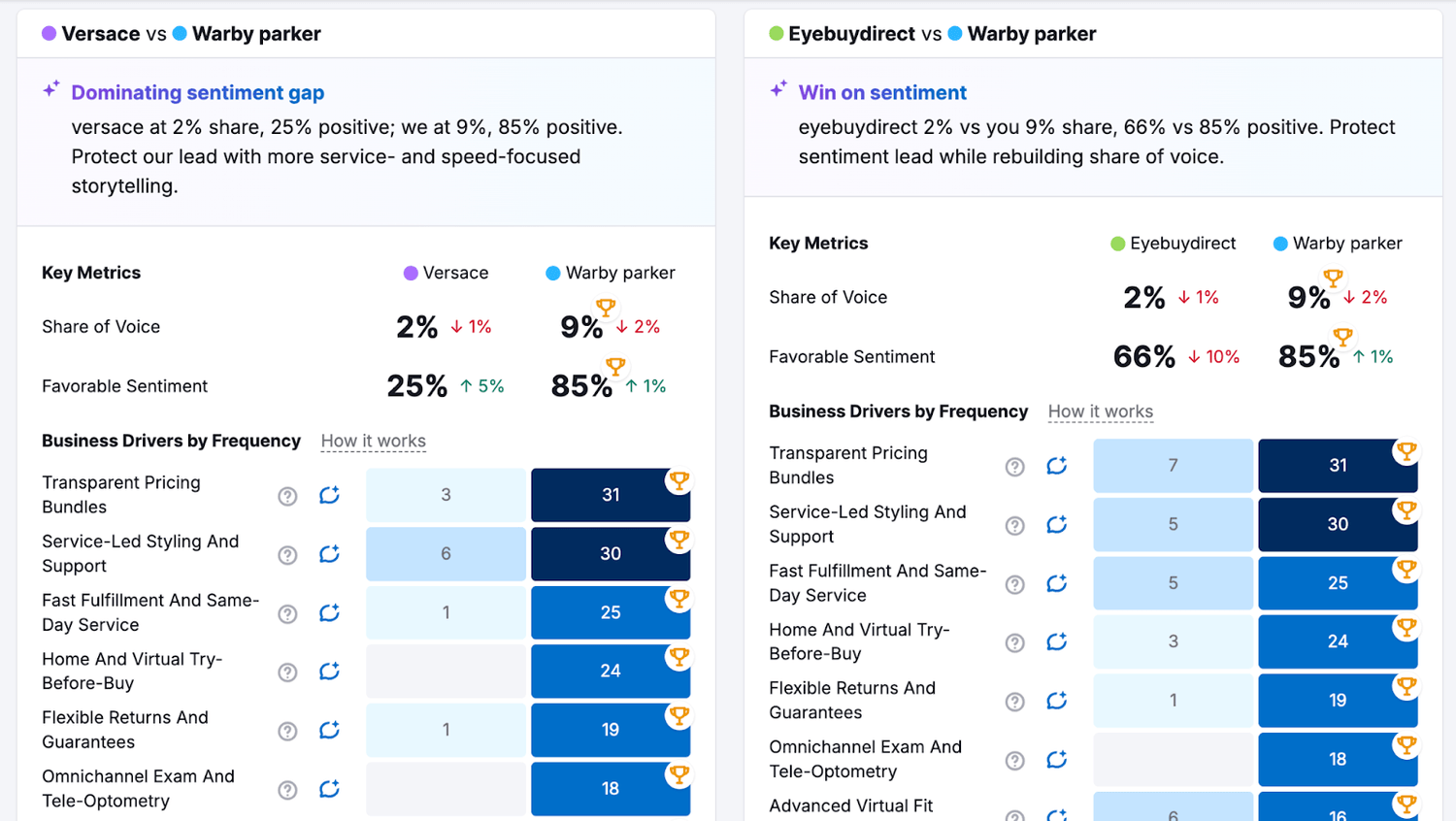
AI platforms don't just find your brand; they talk about it. As Jordan Brannon, President of Coalition Technologies, points out, LLMs can misinterpret a brand’s identity if not monitored.
The Narrative Dashboard
Within the AI Visibility Toolkit, the Brand Performance reports allow you to see exactly how Google, ChatGPT, and Gemini describe you. This feature generates a set of synthetic prompts based on your domain and location, mixing branded and non-branded queries, and updates weekly.
The Four Essential Views:
Brand Performance (SOV): Benchmarks your AI Share of Voice against competitors.
Perception (Sentiment): This tracks whether mentions are positive, neutral, or negative.
Narrative Drivers: Reveals the specific citations and questions driving the conversation.
Questions: Analyzes what users are actually asking about your niche.
Expert Case Study: Steering the Narrative
Coalition Technologies used these reports to help a client in the military surplus industry. They discovered ChatGPT was mislabeling the client’s gear as "outdated technology." Jordan Brannon’s team used this insight to refresh the brand's "About" page, homepage, and social profiles. By updating the messaging to emphasize "authentic military grade" rather than "surplus," they successfully steered AI sentiment back toward accuracy, proving that you can indeed influence an LLM’s perception.
Strategist Note: Use the Key Business Drivers by Frequency chart to see which product features AI systems associate with your brand. If your "affordability" is cited more than your "quality," and you want to be a luxury brand, you have a narrative gap to close.
Feature 3: Competitor Research – Identifying Your AI Visibility Gaps
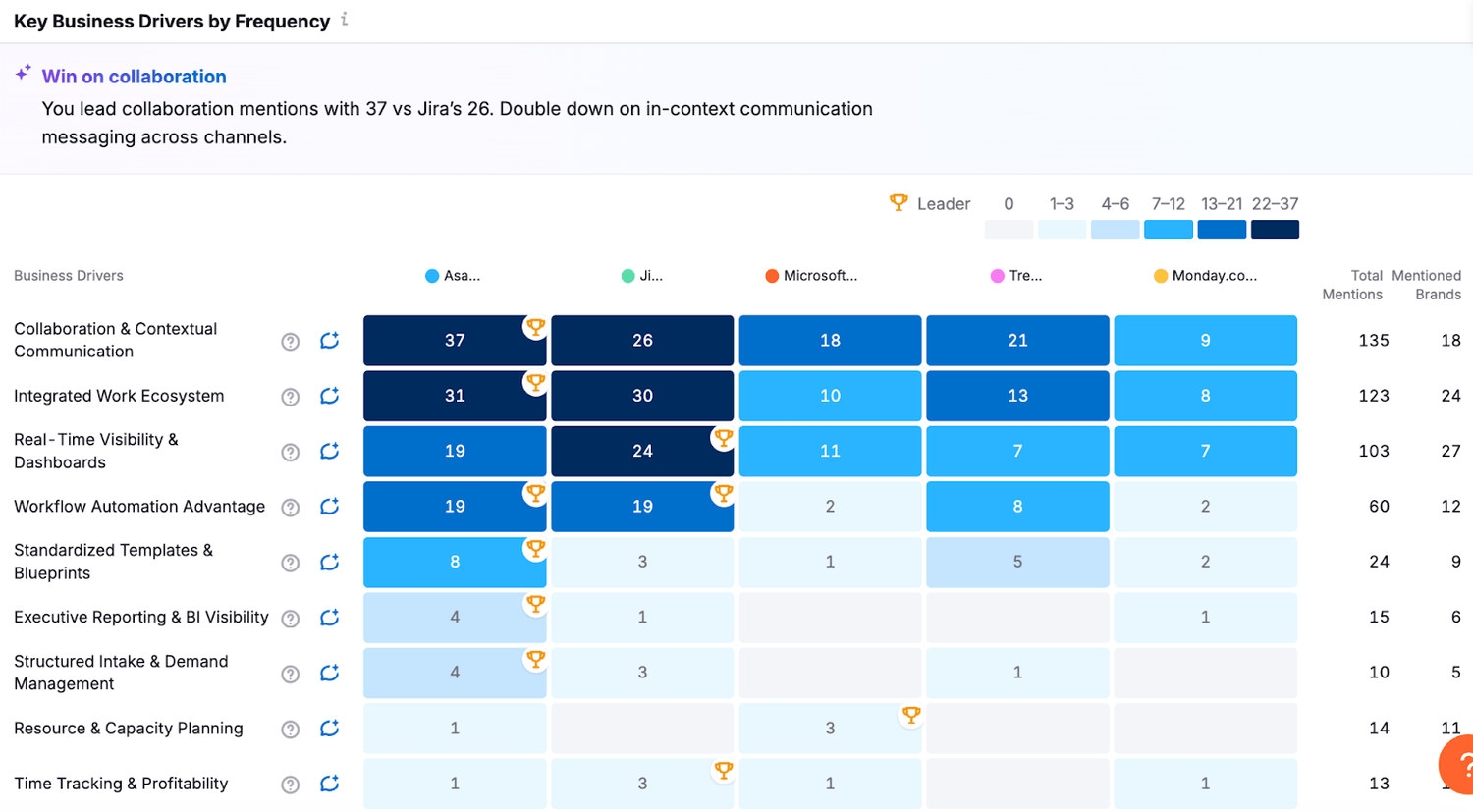
In the AI search landscape, being second often means being invisible. AI platforms typically cite only 3 to 5 trusted sources per response. If your rival captures those spots, they solidify a "first-mover advantage."
Running a Side-by-Side Gap Analysis
Open the Competitor Research report and enter your domain plus up to four rivals. The tool will provide comparative benchmarks for AI visibility, mentions, and audience size.
The Power of Filters:
The "Missing" Filter: This identifies topics where multiple competitors are cited, but your brand is nowhere to be found. These are "red alert" content gaps.
The "Weak" Filter: Shows topics where you have some visibility, but your competitors are cited significantly more often.
By analyzing these gaps, you can prioritize content that reclaims your Share of Voice. Remember, LLM traffic is estimated to become up to 4.4x more valuable than traditional search because these users are often "warmer" leads who are deeper in the decision-making process.
Feature 4: Prompt Research – Keyword Research for the LLM Age
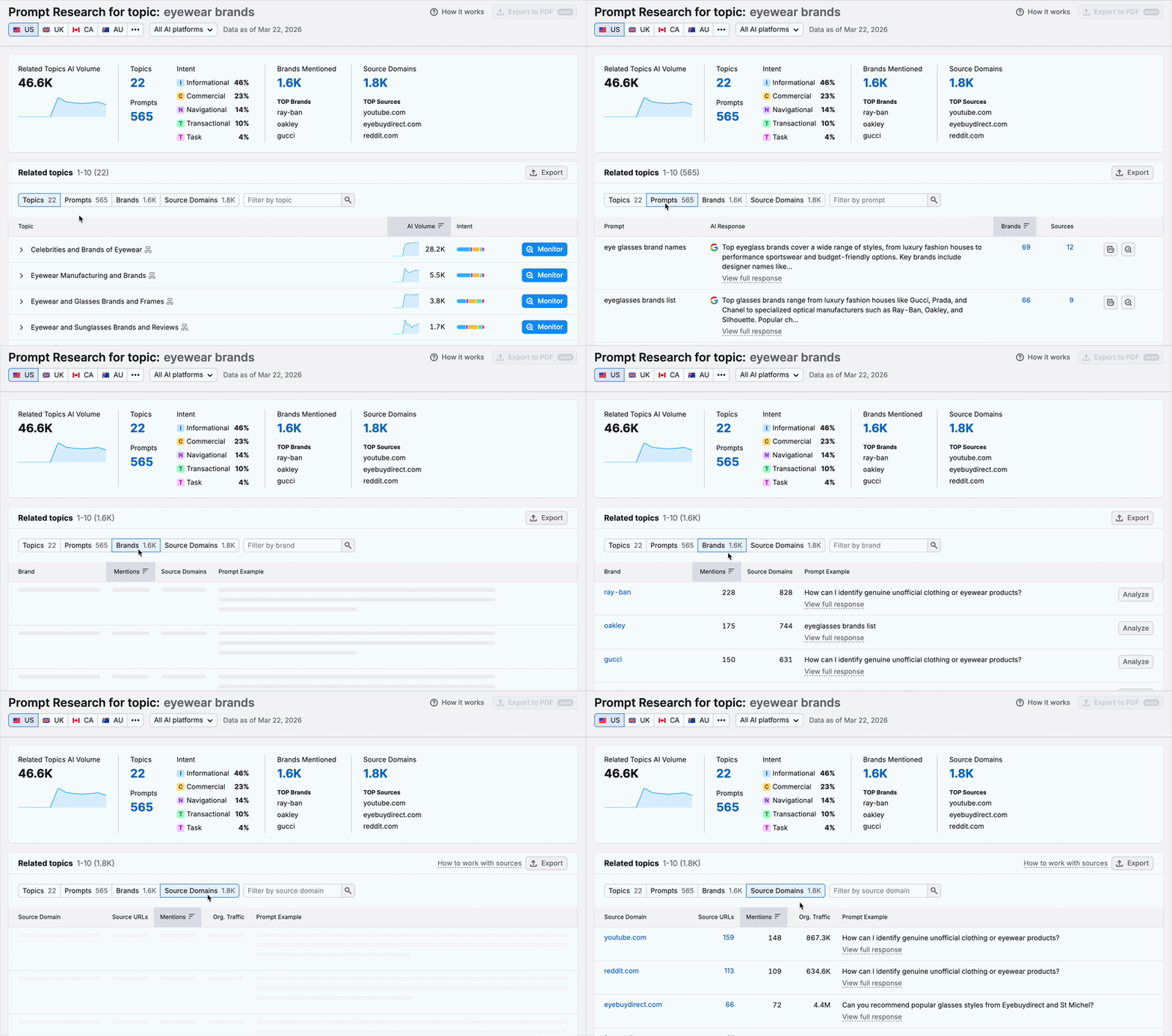
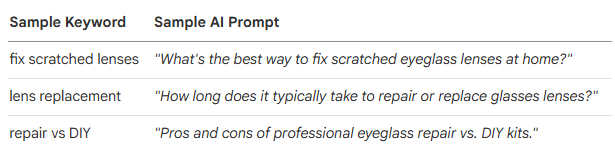
In traditional SEO, we target fragments. In the AI age, we target intent. Research from Zach Paruch shows that the average ChatGPT prompt is 23 words long, whereas the average Google search is only 3.4 words.
Topics vs. Prompts: Why Database Logic Matters
Semrush organizes its prompt database by Topic Level rather than single, disconnected prompts. This is a crucial distinction for the Senior Strategist. Tracking thousands of individual, long-tail prompts is inefficient; tracking the intent clusters behind those prompts is where the strategy lies.
Keywords vs. Prompts Comparison
Interpreting Prompt Metrics
When you enter a topic in Prompt Research, you’ll see:
Related Topics AI Volume: An estimate of how often users ask about this topic cluster across AI platforms.
Intent (Task vs. Informational): "Task" intent means the user wants the AI to do something (write code, plan a trip). "Informational" means they want to learn.
Brands Mentioned: The number of unique brands found in LLM responses for this topic. High brand counts suggest a competitive "Red Ocean," while low counts represent a "Blue Ocean" opportunity for authority building.
Feature 5: Position Tracking for AI – Daily Monitoring Across Surfaces
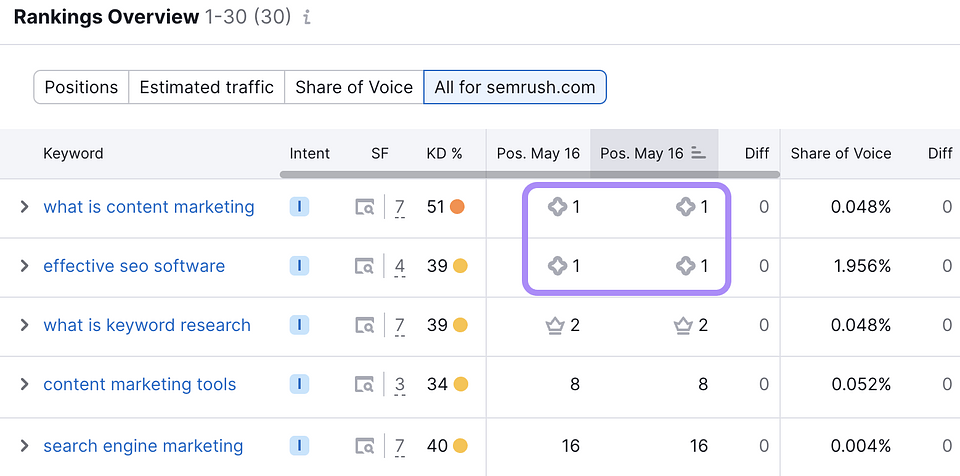
AI outputs are volatile. They can change every time a question is asked. Position Tracking has been upgraded to monitor these daily fluctuations across ChatGPT and Google AI Mode.
Setting Up Your Tracking Campaign
You can add custom prompts to your campaign to capture the "Exact Voice" of your customer. Instead of tracking "affordable glasses," track the full persona-driven prompt: "Where can I buy designer-quality glasses online without paying $400?"
The AI Overview Logic: Within the Position Tracking dashboard, you can use the SERP Features filter to isolate AI Overviews.
A Citation = #1 Ranking: When your domain is cited as a source in an AIO, Semrush records this as a #1 ranking, even if your organic link is on page two.
Visibility Toggle: You can enable or disable AIO data to see how your "traditional" rankings compare to your "AI" rankings. This helps you explain to stakeholders why traffic might be steady even if traditional rankings are slipping, or vice versa.
Feature 6: AI-Readiness Site Audit – Technical SEO for the Bot Era
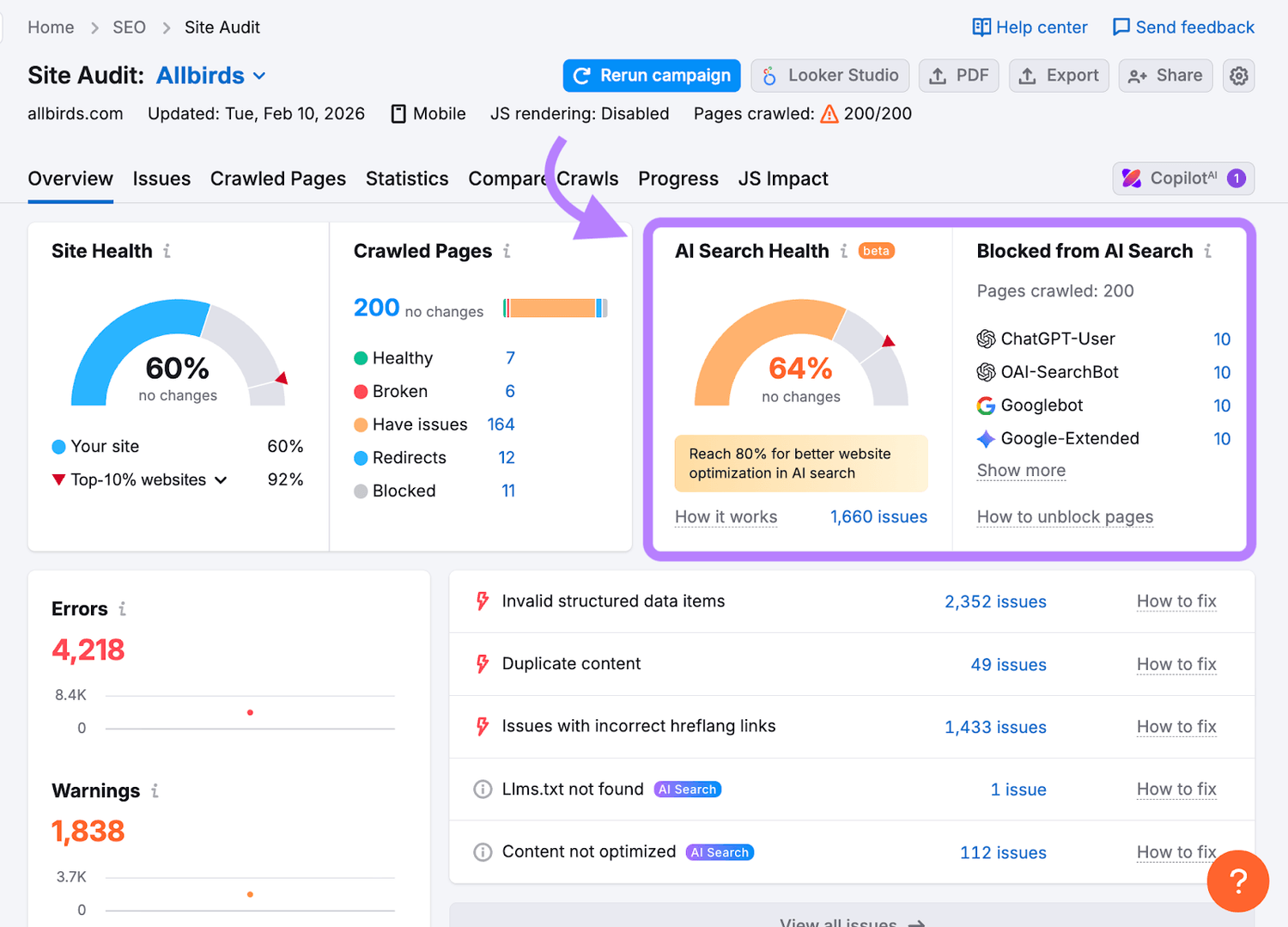
If an AI bot can’t parse your site, it cannot cite your site. The Site Audit tool now features an AI Search Health score. This isn't just about "crawling"; it’s about "understandability."
Strategic Checklist for Bot Accessibility
The AI Crawler Audit: The tool checks your robots.txt to see if you are inadvertently blocking critical agents like GPTBot, OAI-SearchBot, Applebot-Extended, or PerplexityBot.
The strategic value of llms.txt: This file acts as a roadmap for LLMs, helping them understand site structure. Site Audit will flag if this is missing.
Structured Data Validation: Use the Thematic report to validate FAQ, How-to, and Article schema. While Google says schema doesn't guarantee an AIO spot, it significantly supports inclusion by making your data "extractable."
Feature 7: AI Traffic Dashboard & Unified Reporting
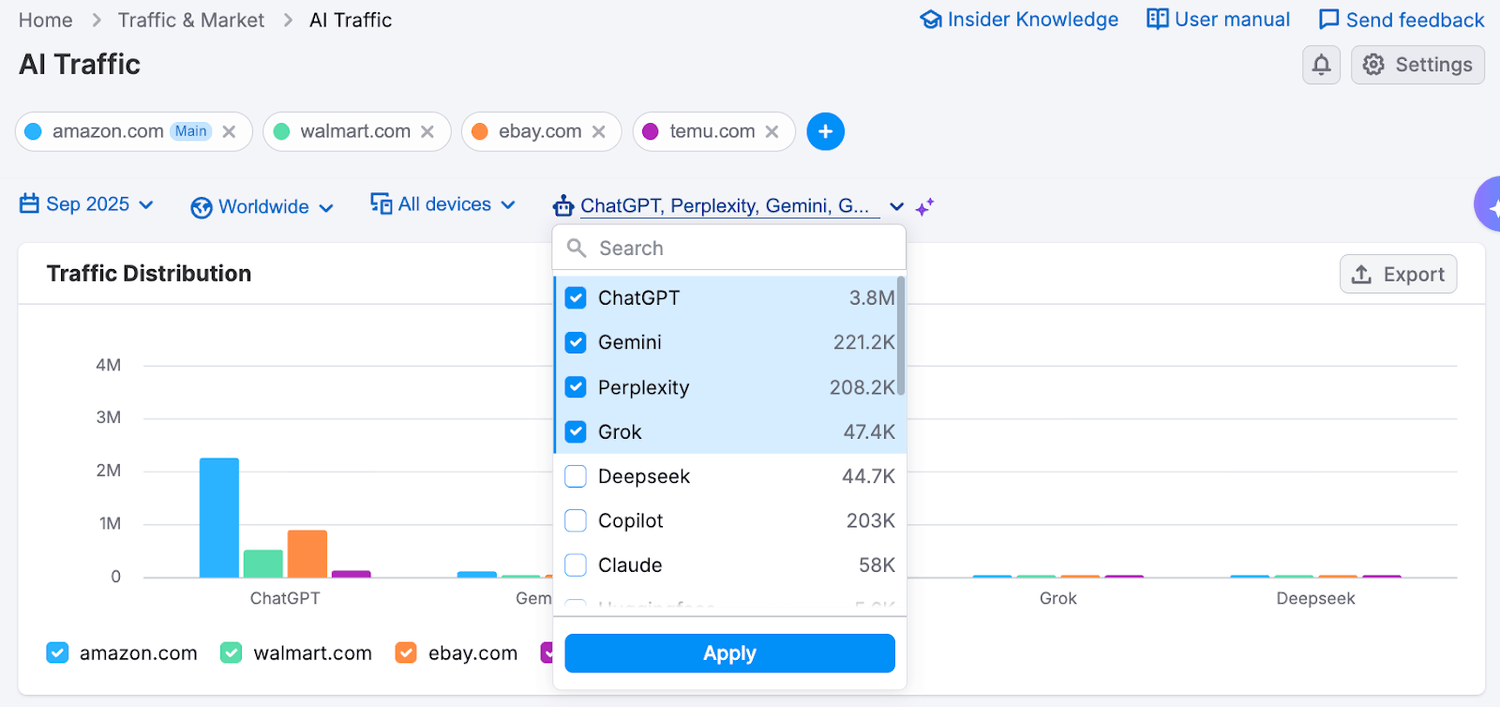
Proving ROI is the hardest part of the GEO transition. The AI Traffic Dashboard (located in the Traffic & Market Toolkit) uses clickstream data to estimate how much referral traffic your competitors are receiving from platforms like ChatGPT and Gemini.
Unified Reporting with "My Reports"
For your own brand, you need to combine internal and external data. Use the My Reports drag-and-drop builder to create a unified PDF:
Google Analytics (GA4) Integration: Connect your GA4 to track actual conversions and sessions driven specifically by AI referral traffic.
AI Brand Performance Widgets: Drag in charts showing your Share of Voice and Sentiment trends.
Traditional SEO Metrics: Include Authority Score and keyword rankings to show the total search picture.
This unified view is essential for demonstrating that while organic CTR might be down, Total Visibility (Brand Mentions + AI Citations + Traditional Search) is driving higher-quality leads.
Deep Dive: 2026 AI Search Trends You Can't Ignore
The landscape of 2026 is defined by two words: Volatility and Multimodality.
AIO Volatility: Our research shows AIOs are not stable. They triggered for 6.49% of queries in January 2025, peaked at 24.61% in July, and settled at 15.69% in November. Expert Tip: Don't panic over monthly shifts. AI Overviews are being layered on top of existing formats, not always replacing them.
The Multimodal Shift: Google Lens processes 12 billion searches monthly. Circle to Search queries have tripled. Your content must be visually "readable" with descriptive alt-text and video transcripts to be cited in these visual journeys.
Industry Saturation: Impact is not uniform. Science information has a 25.96% AIO trigger rate because it relies on consensus data. Real Estate and Shopping are under 3%, as they require real-time local data that LLMs currently struggle to provide.
The Gen Z Factor: 31% of Gen Z users start searches on AI platforms. If your brand isn't present in the "learning phase" of their journey, you lose them before they ever reach a search engine.
Strategic Framework: How to Get Cited by AI Systems
To succeed, follow this three-phase roadmap developed by our senior architects:
Phase 1: Clarity & Context (Weeks 1–4)
Action: Run a Site Audit to ensure no AI bots are blocked.
Content: Implement Summary-First sentences. Lead with the direct answer. If a section is titled "How to repair lenses," the first sentence should be: "To repair eyeglass lenses, you must first..."
Audit: Use the Cited Pages filter to see what is already working.
Phase 2: Enrichment (Weeks 5–8)
Action: Add transcripts to all video and audio content.
Content: Refresh old content. AI models prioritize "freshness" and "up-to-date" credible information.
Structure: Mirror natural language in your headings. Use "How do I..." instead of "Lens Repair Instructions."
Phase 3: Authority & Usability (Weeks 9–12)
Action: Validate all Structured Data (FAQ and How-to schema) via the Thematic report.
Content: Incorporate original research and concrete data. AI systems trust numbers and case studies.
Engagement: Expand your footprint to Reddit and YouTube, as these are among the most cited third-party domains in AI responses.
Rules for Citation-Worthy Content
Lead with the answer: Start with a 1-2 sentence direct response.
Use specific language: Avoid fluff like "revolutionary" or "cutting-edge." Use precise terminology.
Structure for parsing: Use tables, bulleted lists, and clear heading syntax.
Showcase E-E-A-T: Clearly attribute data to experts to build the trust signals AI models require.
Frequently Asked Questions (FAQ)
1. What Is Semrush AI Search and How Does It Work?
Semrush AI Search is part of the Semrush AI Visibility Toolkit integrated within the Semrush One ecosystem. It is designed to help brands achieve "Total Visibility" in an era where search has shifted from a "search, click, and read" workflow to a "prompt and answer" reality.
The system works by shifting the focus from traditional information retrieval to information synthesis.
It interprets user intent across generative engines like ChatGPT, Perplexity, and Google’s AI Overviews (AIO). Key functions include:
Benchmarking Baseline Visibility: Using the Visibility Overview, you can enter a domain to track your AI Visibility Score, which measures how often AI platforms mention your brand compared to competitors.
Synthetic Prompting: The tool generates sets of synthetic prompts, mixing branded and non-branded queries, to analyze how different LLMs describe your brand.
Daily Monitoring: It provides daily tracking of your brand's presence across AI surfaces, recording a citation in an AI response as a #1 ranking.
2. Why Should You Use Semrush AI Search for Your SEO Strategy?
You should use these tools because traditional SEO playbooks are no longer sufficient in the age of AI. Data shows that Click-Through Rates (CTR) can drop by 15.5% when an AI Overview is triggered; however, being cited by an AI system is considered the "new traffic".
Specific strategic benefits include:
Capturing Warm Leads: LLM traffic is estimated to be up to 4.4x more valuable than traditional search because these users are often deeper in the decision-making process.
Driving Navigational Searches: Being cited as an expert by an AI drives later "navigational" searches, which have recently increased by 10.33%.
Controlling the Narrative: Tools like Brand Performance & Sentiment Analysis allow you to identify if LLMs are misinterpreting your brand identity, giving you the insights needed to refresh content and steer the narrative back to accuracy.
3. When Is the Best Time to Utilize Semrush AI Search?
The best time to start is immediately, as search marketing has reached a "definitive turning point". Because AI platforms typically only cite 3 to 5 trusted sources per response, being second often means being invisible. Utilizing these tools now allows you to secure a "first-mover advantage" before competitors realize they are losing their "Share of Narrative".
The sources also suggest utilizing these tools during specific project phases:
Content Refreshing: Use them to identify "Topic Opportunities" where competitors are mentioned but you are absent.
Technical Audits: During site maintenance to ensure you aren't inadvertently blocking critical agents like GPTBot or PerplexityBot.
Strategic Planning: Following a three-phase roadmap (Clarity, Enrichment, and Authority) over a 12-week period to future-proof your brand for the 2026 landscape.
4. Where Can You Access Semrush AI Search Tools?
These tools are located within several specific areas of the Semrush One ecosystem:
AI Visibility Toolkit: Found in the left-hand menu, this contains the Visibility Overview, Brand Performance reports, and Competitor Research.
Prompt Research: A specialized tool for identifying intent clusters and AI search volumes.
Site Audit: Includes the AI Search Health score and the Thematic report for validating structured data.
Traffic & Market Toolkit: Houses the AI Traffic Dashboard, which uses clickstream data to estimate referral traffic from platforms like ChatGPT and Gemini.
5. Who Can Benefit from Using Semrush AI Search?
A wide range of digital professionals can benefit from these tools:
Modern Marketers and AI Search Strategists: Who need to move beyond "ten blue links" to architect a brand presence within a synthesized ecosystem.
Senior Content Architects: Who view "inclusion" as a massive branding win and need to track citation frequency.
SEO Agencies: To help clients (such as those in the military surplus or luxury industries) correct LLM misperceptions and improve sentiment.
Brands Targeting Gen Z: Since 31% of Gen Z users start their searches directly on AI platforms, these brands must be present in the AI "learning phase" to avoid losing these customers.
Stakeholders and Executives: Through Unified Reporting, which combines traditional SEO metrics with AI visibility to demonstrate total search ROI.
Conclusion: Future-Proofing Your Brand with Semrush One
The era of AI search is not an "SEO killer", it is an SEO multiplier. Traditional search usage has actually increased since the adoption of ChatGPT, as users now have more places to find information. Success in 2026 and beyond requires a unified strategy that bridges the gap between traditional rankings and AI citations.
By the time your competitors realize they are losing their "Share of Narrative," it will be too late to catch up. Take control of your brand's AI presence today.
Start your 7-day free trial of Semrush One and gain total visibility across all search surfaces.



Created with © Systeme.io
Disclaimer: This page contains affiliate links. If you purchase through these links, we may earn a commission
at no extra cost to you. We only recommend tools we trust.