7 Essential Tips for Boosting AI Search Visibility with Semrush
7 Essential Tips for Boosting AI Search Visibility with Semrush
Introduction: The New Frontier of Digital Discovery
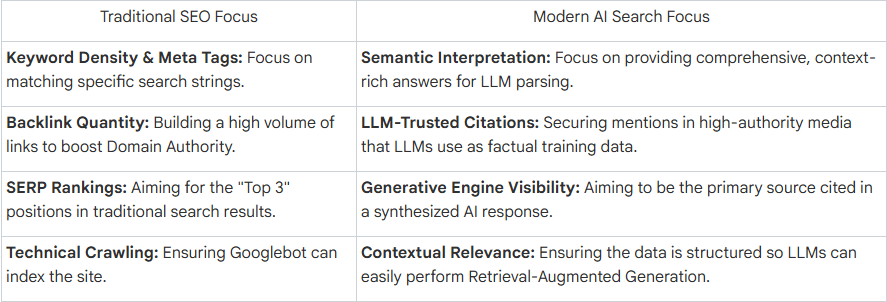
The digital landscape is currently undergoing its most seismic shift since the invention of the crawler. For over two decades, the hierarchy of the web was defined by Search Engine Optimization (SEO), the art and science of ranking within a list of "blue links." However, we have transitioned into a new era: the age of Generative Discovery. Today, consumers are increasingly bypassing traditional search results in favor of Large Language Models (LLMs) and generative engines like ChatGPT, Claude, and Gemini. These engines don’t just point users to a website; they synthesize information, provide direct answers, and cite sources as the "primary authority."
In this environment, "AI Search Visibility" has become the critical North Star KPI for modern brands. It is no longer sufficient to appear on page one of a search engine. To remain relevant, your brand must become the factual foundation upon which an LLM builds its response. This transition represents the birth of Generative Engine Optimization (GEO). While SEO focused on technical site health and keyword density, GEO focuses on brand authority, semantic clarity, and factual presence within the datasets that power AI.
"The transition from traditional Search Engine Optimization to Generative Engine Optimization represents a fundamental shift in how brands must approach digital discovery. It is the move from being found in a list to being cited as a factual authority by an AI."
The objective of this guide is to provide a strategic roadmap for moving beyond simple rankings. We are no longer just optimizing for algorithms; we are optimizing for "Retrieval-Augmented Generation" (RAG). By the end of this document, you will understand how to ensure your brand is seen, trusted, and most importantly, cited by the AI models that now dictate consumer behavior.
Tip 1: Benchmark Your Performance with the AI Visibility Index
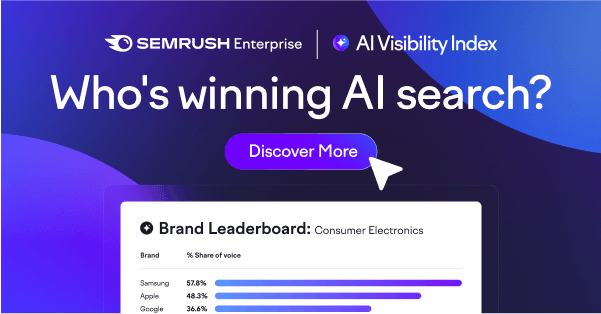
In any high-level growth strategy, you cannot manage what you do not measure. In the world of GEO, benchmarking is significantly more complex than tracking a single keyword rank. You must understand how AI models perceive your brand across a multidimensional space of queries. The Semrush "AI Visibility Index" is the industry-standard tool for this baseline assessment.
The AI Visibility Index allows brands to strip away the mystery of generative responses. It analyzes which brands are currently leading the conversation within LLM outputs and identifies the specific strategies they are employing to capture that "Share of Model." This is about identifying who is being featured as the "expert" in your niche and why. Are they being cited because of their technical documentation? Their media mentions? Or their local footprint?
Tracking brand mentions within LLM outputs is a strategic necessity. If an AI assistant provides a recommendation for a service in your category but fails to mention your brand, you effectively do not exist in that user's journey. Use the index to discover your current standing and identify the "visibility gaps" that your competitors are currently filling.
Initial AI Audit Steps
[ ] Analyze Brand Features by LLMs: Use the index to see how frequently your brand appears in generative summaries compared to your top five competitors.
[ ] Track Competitor Visibility Patterns: Identify the content formats (e.g., lists, technical guides, reviews) that LLMs are currently favoring for your industry leaders.
[ ] Sentiment & Context Analysis: Determine if your brand is being mentioned in a positive, neutral, or authoritative context. LLMs rely on sentiment to determine "trustworthiness."
[ ] Actionable Strategy Implementation: Review the automated AI tips provided by the Visibility Index to prioritize immediate technical or content fixes.
Tip 2: Unify Traditional SEO with GEO Capabilities via Semrush One
The most common mistake senior strategists make during this transition is viewing SEO and GEO as competing disciplines. In reality, they are two sides of the same coin. The "Semrush One" solution is built on the philosophy of unification, allowing brands to win every search medium through a single, integrated platform.
Traditional SEO provides the structural integrity, the backlinks, the technical health, and the site speed, that allows LLMs to crawl and ingest your data efficiently. GEO provides the semantic relevance that ensures an LLM selects your data as the "best" answer. By uniting these tools, you ensure that you are "measuring and growing everywhere" you are discovered. Whether a user is using a traditional search bar or a voice-activated AI assistant, your brand must remain the consistent, authoritative answer.
Strategist's Note on Unified Discovery: The era of "Search" is evolving into the era of "Discovery." This means your visibility is no longer tethered to a specific platform. Semrush One enables a 360-degree view, ensuring that your authority on traditional SERPs feeds your visibility in generative engines.
Tip 3: Create SEO-Ready Content Optimized for AI Interpretation
Content is the raw data that feeds the AI revolution. However, to boost visibility, content must be optimized for "AI Interpretation." This involves more than just writing for humans; it involves structuring information so that it is mathematically "proximate" to the questions users ask.
Using the "Content" toolkit, you can identify "high-ranking content ideas" that aren't just trending, but are fundamentally aligned with the way LLMs categorize knowledge. The "SEO Writing Assistant" serves as your real-time optimization engine. It goes beyond grammar and spellcheck, scoring your content on its ability to satisfy both traditional search algorithms and the "semantic density" requirements of AI models.
Technical Deep Dive: AI Readability LLMs look for clarity, originality, and authority. If your content is filled with fluff or redundant information, the model's "token optimization" will likely lead it to skip your content in favor of a more concise, data-rich source. The SEO Writing Assistant helps you refine your tone of voice and originality, ensuring that your perspective is unique enough to be valued by a generative engine.
Content Optimization Rules
1. Semantic Topic Clustering: Instead of targeting a single keyword, use the Content toolkit to cover an entire topic ecosystem. LLMs favor sources that demonstrate "topical authority" through comprehensive coverage.
2. Optimize for Factual Density: Use the SEO Writing Assistant to ensure every paragraph provides high-value information. AI models are essentially factual synthesizers; the more "facts per sentence" you provide, the higher your utility.
3. Refine Readability for Token Efficiency: Simplify complex sentence structures. AI models process text in "tokens." Clear, direct writing is easier for these models to parse and summarize accurately.
4. Maintain a Consistent, Expert Tone: LLMs classify brand authority based on tone. Use the toolkit to ensure your brand's voice remains professional and authoritative across all touchpoints, signaling to the AI that you are a reliable source.
Tip 4: Leverage AI PR to Build Authority with LLM-Trusted Media
In the era of AI, authority is social. Generative AI models do not exist in a vacuum; they are trained on a subset of the web that is deemed "high-trust." This often includes major news outlets, academic journals, and industry-specific media leaders. If your brand is not mentioned in these "LLM-trusted" publications, your chances of being cited in a generative response drop significantly.
The "AI PR" toolkit is designed to bridge this gap. It allows you to identify relevant media outlets that carry the highest weight with LLM training sets. By launching outreach campaigns to these specific partners, you aren't just getting "PR", you are building a citation graph. When a high-authority publication mentions your brand, the AI model views that mention as a validation of your expertise.
Strategist's Note on Outreach: The speed of the AI PR toolkit, allowing you to launch campaigns in minutes and monitor brand presence in real time, is vital. In the AI era, being the "first to be cited" on a new topic can lead to long-term visibility as the primary source for that query.
Pro Tip: There is a direct correlation between media mentions in LLM-favored publications and your brand's authority in AI search. Focus your PR efforts on high-trust outlets to secure your spot as a factual source.
Tip 5: Master the Competitive Landscape through Gap Analysis
In an AI-driven market, competition is not static. Competitors are constantly vying for "Share of Discovery." To stay ahead, you must move beyond basic competitor tracking and into deep "Gap Analysis" using the "Traffic & Market" toolkit.
The goal is to identify exactly which keywords and backlinks are driving traffic to your competitors' AI-generated answers. Use "Market Explorer" to understand your brand’s specific role and classification. Are you a "Leader," a "Challenger," or a "Niche Player" in the eyes of the AI market? Market Explorer allows you to visualize your market share of discovery, helping you understand where you are losing ground.
Technical Deep Dive: The Keyword and Backlink Gap By analyzing the keyword gap, you can find the high-value queries where your competitors are being cited as the authority while you are absent. By analyzing the backlink gap, you can see which authoritative domains are lending their "trust" to your rivals. Bridging these gaps is the most direct route to increasing your AI search visibility.
Competitive Intelligence Metrics
AI Traffic Potential: Analyze the estimated volume of traffic coming from generative engines for specific keywords.
Discovery Market Share: Use Market Explorer to determine your percentage of visibility within the total market ecosystem.
Semantic Keyword Gaps: Identify topics where competitors are being cited by LLMs but your brand is excluded.
Authority Backlink Gaps: Target the specific high-authority domains that are currently fueling your competitors' LLM trust scores.
Tip 6: Optimize Local Footprints for Contextual AI Results
For organizations with a physical presence, AI search visibility is often hyper-local. When a user asks an AI assistant for a "dentist near me" or a "marketing agency in Boston," the AI doesn't just look at websites; it looks at "Contextual Signals."
The "Local Marketing Hub" provides the infrastructure to dominate these local generative queries. AI models rely heavily on Google Business Profile (GBP) data and top-tier directory listings to verify that a business is legitimate and currently active. If your information is inconsistent across the web, the AI model will perceive your brand as "low-trust" and will not recommend it.
Furthermore, AI-driven review management is a game-changer. By using AI to respond to customer reviews, you ensure a high volume of engagement. These interactions are indexed by LLMs to determine brand sentiment. A brand that actively engages with its customers and maintains a positive sentiment is far more likely to be featured in a "top-rated" or "recommended" AI response.
Local AI Visibility Checklist
[ ] Google Business Profile Audit: Ensure every field is filled, photos are updated, and services are clearly categorized for AI parsing.
[ ] Listing Management Sync: Use the toolkit to ensure your Name, Address, and Phone (NAP) data is 100% consistent across all top directories.
[ ] AI-Powered Review Strategy: Implement AI to respond to all reviews immediately, maintaining a high sentiment score that signals reliability to LLMs.
[ ] Local Discovery Benchmarking: Monitor your ranking specifically within local maps and local AI-generated recommendations to ensure you are surpassing your KPIs.
Tip 7: Scale Strategy Using AI-Driven Marketing Databases
To achieve Fortune 500-level growth, your strategy must be backed by massive data scale. You cannot optimize for AI search using a small-scale tool; you need a global database that mirrors the scale of the LLMs themselves.
Semrush is powered by one of the world's largest AI-driven marketing databases. This scale, spanning billions of keywords and trillions of backlinks, is what allows for "Predictive Visibility." It reveals insights that your competitors will never see coming, such as emerging keyword trends or subtle shifts in backlink authority across entire industries.
Scaling your strategy means moving from "reactive" SEO to "proactive" GEO. It involves using these massive datasets to forecast traffic, revenue, and ROI. When you have access to millions of domain profiles and global databases, you can build a growth engine that is optimized for how AI models will evolve in the future, not just how they look today.
By The Numbers: The Scale of AI Optimization
Billions of Keywords: Access the massive breadth of data required to map every possible discovery path a user might take via AI.
Trillions of Backlinks: Leverage the deepest backlink index to map the web's authority structure and identify high-trust citation targets.
Millions of Domain Profiles: Conduct comprehensive competitive intelligence on a global scale to understand market shifts in real time.
Geo-Specific Databases: Use localized data to ensure your AI search visibility remains strong across different regions, languages, and cultures.
Case Study Insights: Real-World Success in the AI Era
The transition to AI-first visibility is already being led by brands that have embraced a data-driven approach. The following snapshot success stories demonstrate the direct correlation between utilizing an integrated toolkit and achieving explosive organic growth.
Wix: Data-Driven Content Strategy
Idan Segal, Organic Growth Lead at Wix, has fundamentally changed how his team operates by leveraging these toolkits. Rather than guessing what content might perform, they use Semrush as a "right hand" to ensure they are working on the "right content" from the start. By using data-driven insights to prioritize their content calendar, Wix has streamlined its path to authority, ensuring that every piece of content produced is optimized for discovery in both traditional and generative search environments.
Landbot: 7x Traffic Increase via Authority Building
Barbora Jassova, Content Strategist at Landbot, proves that you don't need a massive "army" of SEO specialists to achieve massive results. By focusing their content strategy on high-authority topics identified through the toolkit, Landbot saw their overall organic traffic increase sevenfold. Most impressively, their blog traffic, which was optimized for specific user queries, came to make up over 75% of their total visits. This demonstrates the power of using AI tools to dominate the information-seeking stage of the buyer's journey.
Smileworks: Local to National Authority
Ed Challinor, Co-founder and CEO of Smileworks, provides a masterclass in using tools to "punch above your weight." Originally a local dental practice, Smileworks used the toolkit to identify national ranking opportunities. By optimizing their local footprint while simultaneously building national-level topical authority, they began ranking across the country. Challinor notes that even using only a fraction of the available features led to "explosive" results, proving that data-driven visibility is the ultimate equalizer for smaller brands.

FAQ Section
What Is AI Search Visibility and Why Does It Matter?
AI search visibility refers to the extent to which Large Language Models (LLMs) and AI-driven platforms feature and recommend your brand in their generated responses. It matters because the search landscape is evolving beyond traditional search engines to include AI search and Generative Engine Optimisation (GEO) capabilities. To remain "seen, trusted and unstoppable," brands must ensure they are discoverable everywhere users are looking for information, including within these AI-driven ecosystems.
Why Is AI Search Visibility Important for Your Business?
It is critical for maintaining a competitive edge and managing your brand's digital footprint. Focusing on AI visibility allows you to:
Track Brand Perception: Understand exactly how LLMs are featuring your brand compared to your competitors.
Establish Trust: Modern PR now involves finding and engaging with media outlets that are trusted by LLMs, ensuring your brand is cited by AI as a credible source.
Comprehensive Growth: Integrating AI search visibility into your strategy provides a 360-degree view of your projects, ensuring you don't miss out on traffic from new search technologies.
When Should You Start Focusing on AI Search Visibility?
According to the sources, the time to start is now. Major enterprises are already using these tools as a "growth engine" to optimise for AI search. With over 10 million marketing professionals and 35% of Fortune 500 companies already utilising data-driven marketing suites, businesses that delay may find themselves invisible to the AI models that consumers increasingly rely on for recommendations.
How Can AI Improve Your Search Visibility?
AI enhances visibility by providing data-driven insights that are often invisible to manual analysis. Specifically, it can:
Optimise Content: AI tools can provide feedback on readability, originality, and tone of voice, while also generating high-ranking content ideas and SEO-ready text.
Enhance Local Presence: AI can help optimise Google Business Profiles and automate responses to customer reviews to improve local search rankings.
Precision Advertising: AI-powered ads on platforms like Google and Meta can be launched and optimised to uncover and exploit gaps in competitor strategies.
Keyword Intelligence: AI insights help identify billions of relevant keywords and track them more accurately than traditional tools.
Where to Begin with AI Search Visibility Strategies?
To begin building an effective AI search visibility strategy, you should:
1. Audit Your Current Standing: Use tools like an AI Visibility Index to discover which brands are currently leading in AI search and how your own brand is being featured.
2. Benchmark Competitors: Track your competitors' AI visibility to identify what they are doing successfully and where you can close the gap.
3. Align PR with AI: Shift your outreach strategy to focus on relevant media trusted by LLMs to ensure your brand is cited in AI-generated answers.
4. Leverage Specialised Toolkits: Utilise dedicated AI Visibility toolkits to receive specific tips on improving your strategy for the LLM era.
Conclusion: Staying Unstoppable in an AI-First World
The shift toward AI-powered discovery is not a trend; it is the new reality of the internet. To remain visible, brands must evolve from the traditional "rank and file" mindset of SEO to the "authority and citation" mindset of Generative Engine Optimization (GEO).
Boosting your AI search visibility is a continuous, iterative process. It requires:
1. Auditing your current presence with the AI Visibility Index.
2. Unifying your efforts across every discovery medium via Semrush One.
3. Optimizing content for both humans and the semantic needs of LLMs.
4. Building authority through AI-driven PR and media outreach.
5. Analyzing competitive gaps to stay ahead of the market.
6. Securing your local footprint to win contextual queries.
7. Scaling your entire strategy using the world's most powerful marketing databases.
The future of digital discovery belongs to those who are seen, trusted, and cited as factual authorities. By following these seven tips, you can ensure your brand remains at the forefront of this evolution.
Ready to lead the new era of discovery? Start your 7-day trial of the Semrush toolkits today and begin your journey toward total AI search visibility.



Created with © Systeme.io
Disclaimer: This page contains affiliate links. If you purchase through these links, we may earn a commission
at no extra cost to you. We only recommend tools we trust.