Maximize Your Brand Mentions in ChatGPT: A Comprehensive Guide Using Semrush
Maximize Your Brand Mentions in ChatGPT: A Comprehensive Guide Using Semrush
Introduction: The Shift from Clicks to Synthesized Answers
The digital landscape is currently navigating its most significant pivot since the inception of the search engine. We are witnessing a fundamental move away from the "link-based" economy toward an "answer-based" one. For decades, the North Star of digital marketing was the "blue link", securing a spot in the top 10 organic results to drive a click. However, the rise of Generative AI tools like ChatGPT, Perplexity, and Google’s AI Mode (powering AI Overviews) is rewriting the rules of user behavior.
Users are no longer interested in "clicking through" to three different websites to piece together an answer; they are "consuming synthesized answers." These AI systems crawl the web, parse vast datasets, and present a single, cohesive narrative. In this new paradigm, if your brand isn’t part of that synthesized answer, you are essentially invisible to a massive segment of the market.
This evolution has given rise to AI SEO, also known as Generative Engine Optimization (GEO). AI SEO is the strategic practice of optimizing content so it is extracted, cited, and mentioned within AI-powered responses. The strategy we're building here isn't platform-siloed; it’s an ecosystem play. When you solve for ChatGPT’s extraction patterns, you’re effectively priming your brand for the entire generative landscape, from Gemini to Claude.
The urgency is supported by cold, hard data. Research from the Associated Press-NORC Center for Public Affairs Research indicates that 60% of Americans now use AI to find information at least some of the time. Furthermore, Semrush data from March 2025 reveals that Google triggered AI Overviews for 13.14% of U.S. desktop searches across a study of 10 million keywords. The era of the "zero-click search" has matured into the "AI-synthesized answer," and the brands that adapt will own the conversation.
Why Brand Mentions in ChatGPT are the New Gold Standard
In traditional search, a user acts as the synthesizer, evaluating a list of links. In AI search, the model performs "Decision Synthesis." Instead of presenting a menu of options, the AI evaluates the consensus of the web and names a short set of brands it believes best fit the user's specific query.
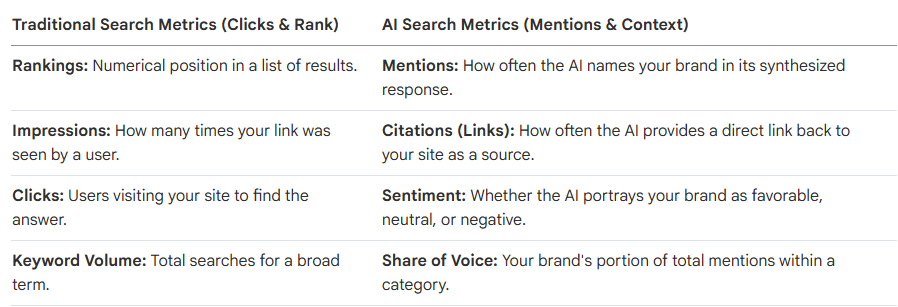
This requires a radical shift in how we benchmark success. In the age of ChatGPT, a "Mention" is the new "Impression." We are moving beyond simple rankings into the realm of brand presence and sentiment.
Benchmarking the Shift: Traditional vs. AI Search Metrics
The Strategic Benefit: Meeting Specific Intents
One of the most powerful aspects of AI SEO is its ability to handle "Query Fan Out", the process where an AI collects information for a primary query and its logical sub-queries. Consider an eyewear brand like Warby Parker. In traditional search, they might target "automatic dog feeder." But user prompts in ChatGPT are far more specific and context-heavy.
As evidenced by the Petlibro case study, users are asking detailed questions like: "How do I choose the best pet-proof feeder for a household with both cats and dogs?" These users aren't just browsing; they have high intent and specific constraints. When ChatGPT mentions your brand as the solution to that specific, complex problem, the conversion probability skyrockets compared to a generic search click.
Furthermore, there is a massive overlap in how LLMs behave. Semrush’s AI Visibility Index shows that brands mentioned in ChatGPT frequently see a ripple effect, appearing in Google's AI Mode and Perplexity because these systems all rely on high-authority, "machine-extractable" signals.
Core Strategy: 7 AI SEO Tips to Earn Citations and Mentions
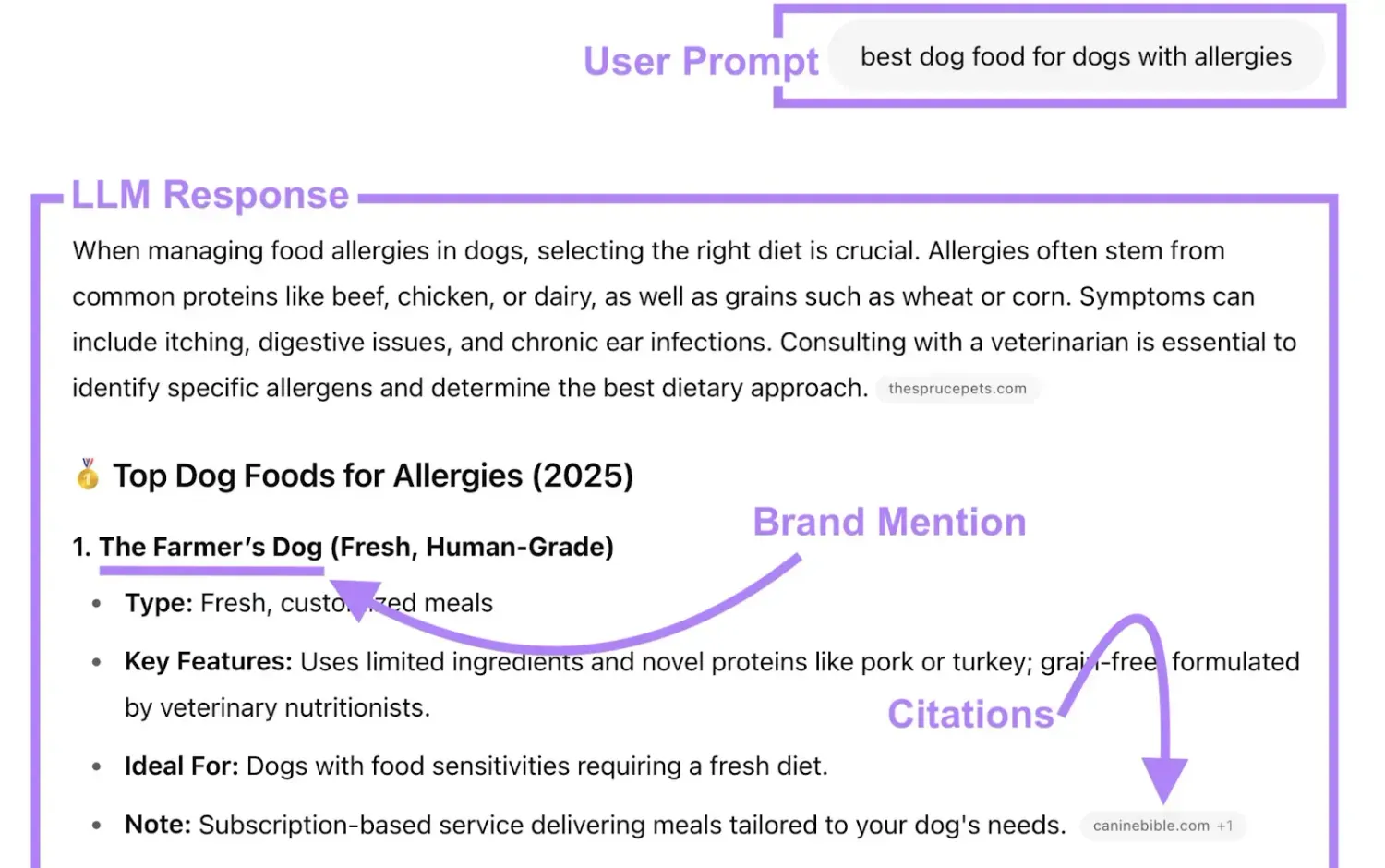
Earning visibility in AI responses requires more than just high-quality writing; it requires "Information Gain" and structural precision. Here is the senior strategist’s playbook for earned mentions.
1. Front-Loading Sections (The "First Sentence Rule")
AI systems don't read articles; they parse segments. To facilitate extraction, the core answer to any heading must be the first sentence of that section.
How-To: If your H2 is "What is Generative Engine Optimization?", the first sentence must be: "Generative Engine Optimization (GEO) is the practice of..."
Strategist Insight: This reduces the "computational cost" for the LLM to identify the answer. Keep the definition to two sentences maximum, then follow with context or examples.
2. Technical Foundation: The Crawlability Bar
An AI cannot cite what it cannot find. If your site has technical friction, LLM web-crawling components will skip you for a cleaner source.
How-To: Use Semrush’s Site Audit to go beyond basic SEO. Follow this path: Site Audit > AI Search Health > # issues.
Priority Fixes:
Eliminate 404 errors (broken links).
Optimize for mobile-friendliness.
Improve page speed (Core Web Vitals).
Remove duplicate content that confuses entity relationship mapping.
3. Structuring for Extraction
LLMs analyze sentence structure by identifying subject-verb relationships. If your writing is flowery or indirect, it becomes "noisy" to a machine.
How-To:
H2/H3 Alignment: Use headings that match likely user queries (e.g., "How to Choose a Ceramic Pan" rather than "Our Ceramic Guide").
Paragraph Length: Maximum 3 sentences.
Subject-Verb Proximity: Keep the subject and verb close together. (e.g., "The product lasts ten years" is better than "After many years of testing in various environments, the product was found to last ten years.")
Clear Antecedents: Avoid ambiguous pronouns like "it" or "this." Repeat the brand name or noun to ensure the AI attributes the quality to the correct entity.
4. Content Freshness & Schema
AI search prioritizes the most current data to avoid hallucinating outdated facts. A page updated in 2025 will almost always beat a more authoritative page from 2022.
How-To: Implement dateModified schema markup. Regularly update statistics, expert quotes, and product specifications. This signals to the ChatGPT web-browsing component that your data is the most reliable "truth" available.
5. Brand Signals: Building Consensus
LLMs build "confidence" in a brand through consensus across the web. If LinkedIn, Reddit, and Google Business Profile all say different things about your brand, the AI's confidence drops.
How-To: Maintain strict consistency in brand naming and descriptions across all platforms. Contribute expert commentary to high-authority publications via Qwoted or HARO. When multiple "trusted" sites mention your brand in the same context, the AI adopts that as a fact.
6. Differentiating with "Information Gain"
AI systems are incentivized to cite original data that isn't already in their training set. This is known as Information Gain.
How-To: Publish proprietary data, unique frameworks (e.g., the "Decision Synthesis" framework), and first-hand case studies. If your site is the only source for a specific statistic, the AI must cite you to justify the answer.
7. Topic Clusters & Internal Links
Topic clusters help AI understand the breadth of your expertise. When an AI performs a "Query Fan Out," it follows internal links to gather supporting evidence.
How-To: Use the Keyword Strategy Builder in Semrush to identify a "Pillar" topic and its "Subpages." Interlink them clearly so the AI can navigate from a broad query to a specific solution effortlessly.
The ChatGPT SEO Workflow: A 3-Step Implementation Plan
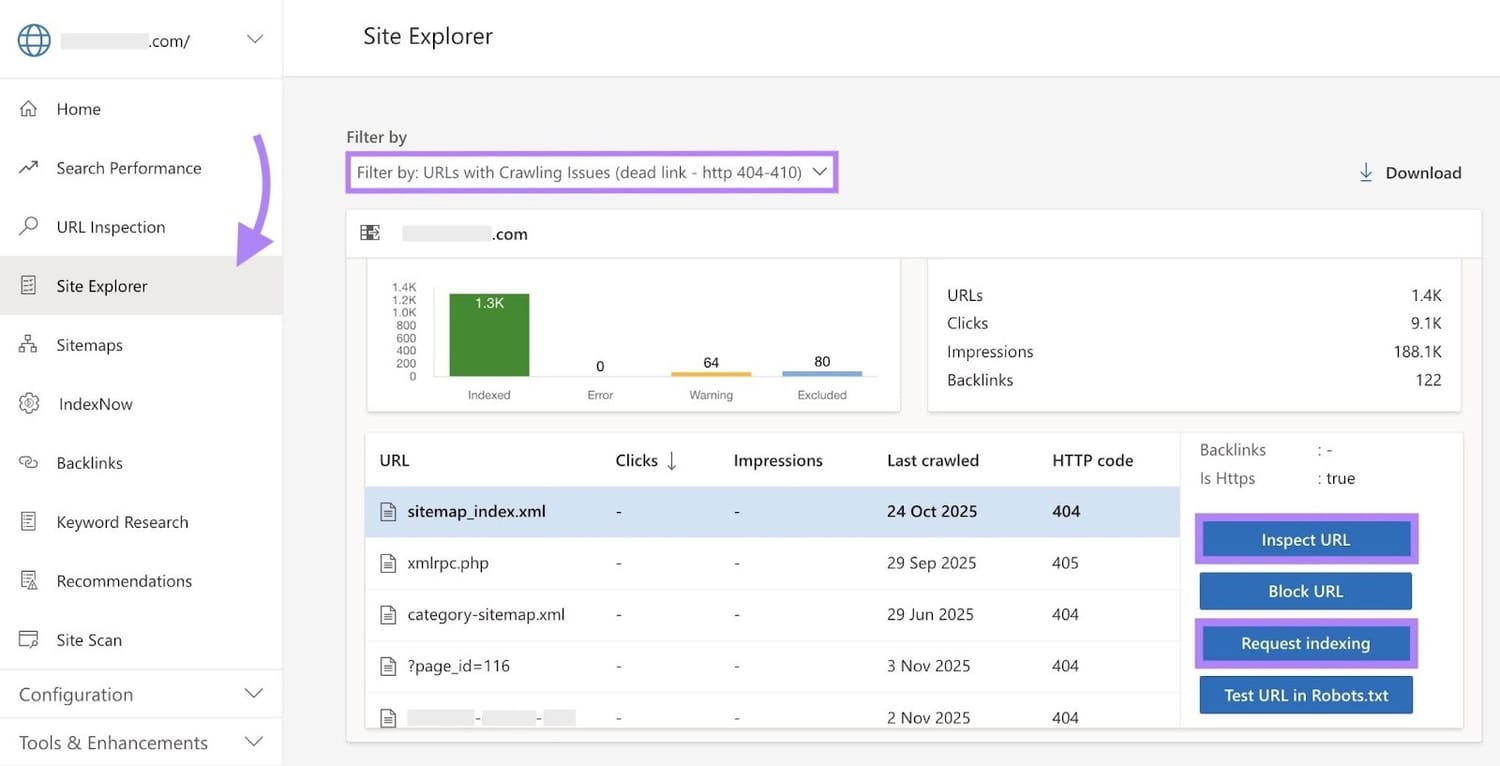
To effectively manage your presence in ChatGPT, you need a repeatable workflow that moves from indexing to authority building.
Step 1: Indexing Mastery
ChatGPT does not have its own independent web crawler for real-time searches; it relies on the indices of Bing and Google.
Action: Ensure your site is healthy in Bing Webmaster Tools. Use the IndexNow protocol to instantly notify Bing of content updates. In Google Search Console, monitor the "Pages" report and use "Request Indexing" for your top-performing "Information Gain" pages.
Step 2: Priming Content for AI Extraction
Use the AI Visibility Toolkit to identify where you are losing to competitors.
Action: Open the Narrative Drivers report. Set the platform to ChatGPT. Use the "Position" filter and select "Not present." This is your Gap Analysis for 2025. It shows you the exact questions users are asking where your competitors are mentioned, but you are not. Create or revise content to answer these specific prompts immediately.
Step 3: Building Authority through "LLM Seeding"
"LLM Seeding" is the process of strategically placing brand mentions on the sites that LLMs trust most.
Action: Use the Visibility Overview in the AI Visibility Toolkit. Navigate to Topics & Sources > Cited Sources. This reveals the top websites ChatGPT cites in your niche. If you are a cookware brand and ChatGPT frequently cites Good Housekeeping or The Spruce Eats, your PR team should prioritize those outlets for guest posts and brand mentions.
Deep Dive: Using the Semrush AI Visibility Toolkit
The Semrush AI Visibility Toolkit is the industry-standard command center for GEO. To master it, you must understand how its four core modules interact.
Visibility Overview: The Executive Dashboard
This provides the "State of the Union" for your brand. Enter your domain and select ChatGPT to analyze:
AI Visibility Score (0-100): Your footprint relative to competitors.
Monthly Audience: The search volume of the prompts you appear in.
Mentions vs. Cited Pages: Mentions are unlinked references; Cited Pages are the specific URLs the AI linked to. Increasing "Cited Pages" is the goal for referral traffic.
Competitor Research: Defining the New Rivalry
In AI search, your competitors may not be who you think. For example, Warby Parker might compete with Zenni Optical for "affordable glasses," but they may find themselves competing with luxury brands like Gucci or Versace for "designer eyewear" prompts.
Workflow: Use the side-by-side view to identify "Missing Topics." This allows you to see which "high-volume" AI themes your competitors are capturing so you can pivot your content strategy.
Brand Performance: Sentiment & Share of Voice
Visibility alone is a vanity metric; sentiment is the performance metric.
Share of Voice (SOV): Your percentage of mentions in non-branded queries.
Overall Sentiment: The split between favorable and neutral mentions. If your brand is consistently neutral, it suggests you lack "Proof Points" or "Expert Analysis" that would lead an AI to describe you as a "leader" or "best-in-class."
Narrative Drivers: The Gap Analysis
This is the most granular tool in the suite. Use the Dive Deeper area to see which "Business Drivers", such as Price, Trust, Value, or Assortment, the AI associates with your brand.
Strategic Pivot: If the data shows Zenni Optical leads on "Assortment" while you (Warby Parker) lead on "Trust," you can choose to either double down on Trust or create content specifically to boost your "Assortment" narrative (e.g., listicles like "Our Top 50 New Styles for Summer").
Analyzing and Managing AI Brand Narratives
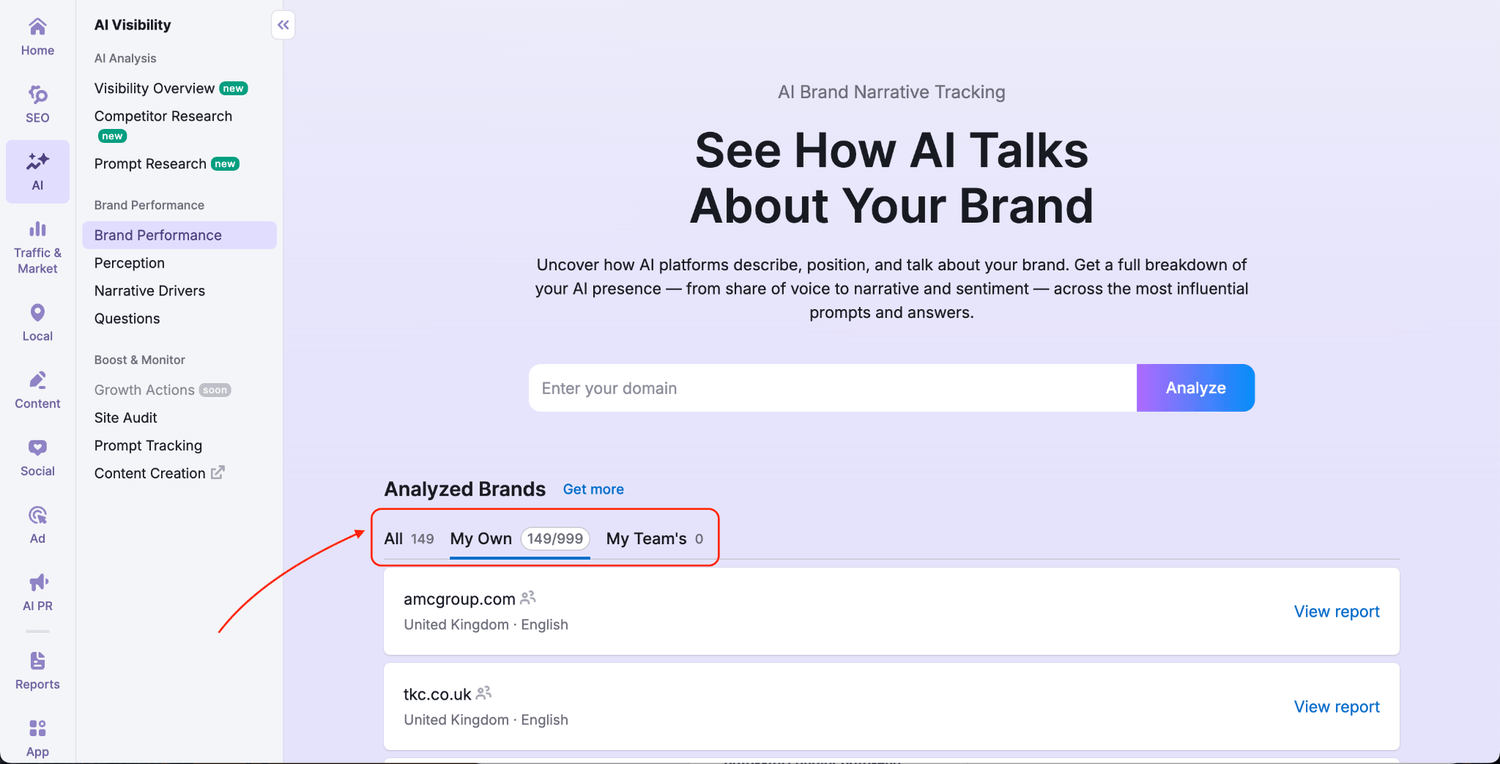
The AI is not just a search engine; it is a storyteller. You must influence the narrative it constructs about your brand.
The Response Playbook
Manage the sentiment trends found in Semrush using this tiered approach:
Engage: When a mention is positive or a query on Reddit or Quora (which LLMs crawl) is unanswered, engage to reinforce favorable sentiment.
Escalate: If ChatGPT is repeating factual errors, find the "Cited Source" spreading the error. Prioritize PR outreach to that specific site to correct the record.
Ignore: Do not waste resources on "noise." This includes bot-generated spam or mentions from low-quality sites with zero audience. These do not impact your AI Visibility Score.
Influencing Key Business Drivers
AI models learn through consensus. Use "LLM Seeding" to associate your brand with specific drivers:
Convenience: If you want to win on this driver, ensure your "free home try-on" and "easy returns" are mentioned not just on your site, but across all third-party reviews and social platforms.
Case Study Example: Asana frequently appears in AI responses for "project management" because they are consistently mentioned across tech publications and Reddit threads. This "repeated presence" gives the LLM the trust signals it needs to recommend them.
Case Study: Real-World Results with AI SEO
The power of these strategies is best illustrated by Baruch Labunski, founder of Rank Secure. By focusing on the principles of machine-extractable content and Information Gain, Labunski achieved a 40% growth in brand citations within 90 days.
The transformation involved a concentrated effort over six to eight weeks:
Content Volume: Added 120 new pages optimized for direct answers.
Content Quality: Revised 15 high-value existing pages to include first-hand case studies and original data.
The Result: A significant surge in AI Overviews impressions for "how-to" and "comparison" keywords. By being the most "extractable" source, his brand became the default answer for high-intent users.
Monitoring and Iterating: The Feedback Loop
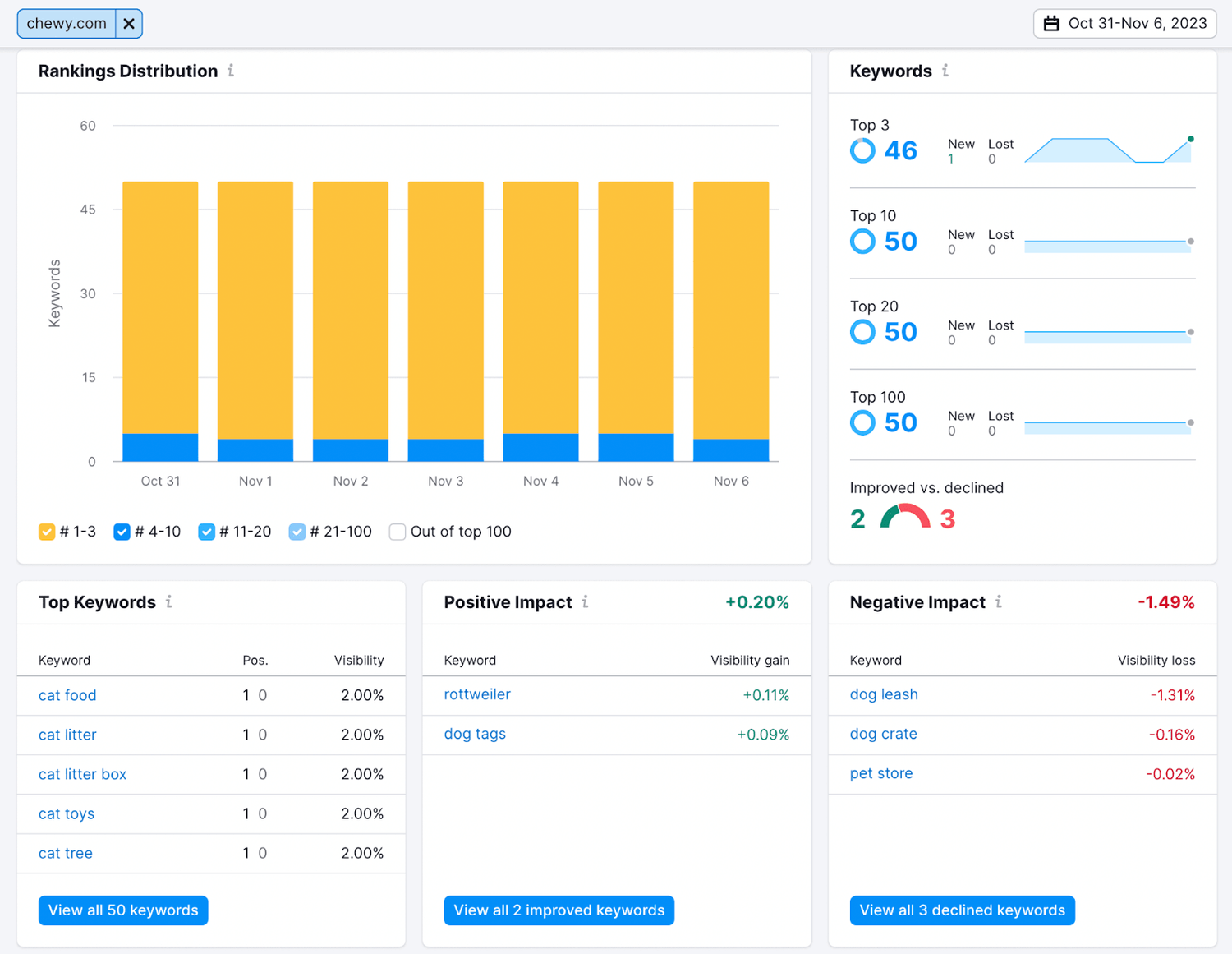
AI SEO is an iterative process. You must establish a weekly reporting cadence to stay ahead of the "Model Drift" that occurs when LLMs are updated.
Prompt Tracking
Don't just track keywords; track prompts. Use the Prompt Research tool in Semrush to find high-value queries, then click "Monitor" to add them to Prompt Tracking.
Metric to Watch: Average Position. This tells you how high you appear in the citation list. If you are consistently third, you need to improve your content's "Front-Loading" to become the primary answer.
Weekly KPIs for the Senior Strategist
Total Mentions: Is your brand footprint growing?
Reach (Monthly Audience): Are you appearing in high-volume prompts?
Sentiment Ratio: Are your favorable mentions increasing relative to neutral ones?
Share of Voice: Are you gaining ground against your "AI Competitors"?
FAQ: Addressing Common AI SEO Concerns
1. What Are Brand Mentions and Why Are They Important?
A brand mention is any online reference to your company, product, or service, regardless of whether it includes a backlink to your site. These mentions generally fall into three categories: linked mentions (which provide SEO authority), unlinked mentions (which build credibility), and AI mentions (where your brand appears in AI-generated responses).
They are critical because they:
Signal Authority: Mentions tell search engines and AI systems that your brand is a reputable source.
Influence AI Responses: Large language models (LLMs) like ChatGPT rely on consistent references across trusted sources to decide which brands to recommend in synthesized answers.
Capture Growing Audiences: With 60% of Americans using AI to find information, being mentioned in these tools is essential to staying in front of your audience.
Measure Awareness and Reputation: They provide a concrete way to track growth and monitor public perception.
2. How Can Semrush Help Improve Brand Mentions in ChatGPT?
Semrush provides a specialized suite of tools, primarily the AI Visibility Toolkit, to help you earn more citations. Key features include:
Identifying Gaps: The Narrative Drivers and Topic Opportunities reports highlight high-intent questions your audience is asking ChatGPT that your brand is currently missing.
Targeting Sources: The Source Opportunities report identifies specific domains that ChatGPT frequently cites for your competitors, giving you a clear list for PR and outreach.
Content Optimization: Tools like the Keyword Strategy Builder help you create "topic clusters" that make it easier for AI systems to crawl and extract information from your site.
Technical Health: The Site Audit tool includes an "AI Search Health" check to ensure your technical foundation (like page speed and mobile-friendliness) allows AI systems to access your content easily.
3. When Should You Start Focusing on Brand Mentions?
You should start focusing on brand mentions immediately, as AI search tools are rapidly changing how users find information. Because ChatGPT and Google's AI Overviews already influence purchase decisions before a user even visits a website, failing to be mentioned means losing visibility to competitors. The sources suggest establishing a baseline first using manual searches or free tools like Google Alerts, then graduating to professional monitoring as your needs scale. You do not need to rewrite all your content at once; instead, start by optimizing your most important pages.
4. Where to Find Insights on Brand Mentions with Semrush?
Insights are available across several dashboards within the platform:
AI Visibility Toolkit (Visibility Overview): This is the primary location for tracking your AI Visibility Score, monthly audience reach, and the total number of ChatGPT prompts referencing your brand.
Brand Monitoring App: Consolidates mentions from the web, social media, press, and backlinks into a single dashboard.
Domain Overview: Even with a free account, the AI Search widget provides a snapshot of your visibility score and the specific AI platforms (ChatGPT, Gemini, etc.) mentioning you.
Brand Performance Report: This dashboard provides data on your Share of Voice and Overall Sentiment, showing how positively your brand is portrayed compared to rivals.
5. Why Use Semrush for Enhancing Brand Mentions in ChatGPT?
Using Semrush is more effective than manual tracking because it automates and scales the process of monitoring thousands of prompts across multiple AI models. It provides competitive benchmarking, allowing you to see exactly where rivals are outperforming you in AI answers. Furthermore, Semrush offers narrative context; instead of just counting mentions, it helps you understand why you are being mentioned, such as being associated with "affordability" or "convenience", so you can adjust your brand messaging to align with what AI models are learning.
Conclusion: Preparing for the Future of Search
The shift from a search engine that provides links to a generative engine that provides answers is a permanent evolution. To remain relevant, brands must stop thinking about "ranking first" and start thinking about "being the answer." By mastering the Semrush One suite, unifying traditional SEO with the AI Visibility Toolkit, you can ensure your brand is not just a line item in a search result, but a trusted citation in the global AI conversation.
Final Action Checklist:
[ ] Technical Audit: Run Semrush Site Audit and fix all issues in the AI Search Health report.
[ ] Identify Gaps: Use Narrative Drivers to find the "Not present" prompts your competitors own.
[ ] Restructure: Apply the "First Sentence Rule" to your top-tier service and product pages.
[ ] LLM Seeding: Identify your niche's "Cited Sources" and initiate a PR/backlink campaign targeting them.
[ ] Benchmark: Set up Prompt Tracking to measure your Average Position and Share of Voice weekly.
The era of AI search is not coming; it is here. It’s time to make your brand the most cited authority in your industry.



Created with © Systeme.io
Disclaimer: This page contains affiliate links. If you purchase through these links, we may earn a commission
at no extra cost to you. We only recommend tools we trust.